
Introduction: the art of lightning recovery
The power nap — between 10 and 20 minutes — is a recovery tool recognized by NASA, Google, and military forces. But many people can't fall asleep that quickly, or wake up more tired than before. The secret? Breathing. By combining a relaxation breathing technique with precise timing, you can achieve ultra-short restorative sleep and wake up recharged.
The science of power napping
Why 10-20 minutes? Because it's the duration that allows you to reach stage 2 sleep (theta waves, sleep spindles) without entering deep sleep (stage 3-4). If you sleep more than 30 minutes, you risk "sleep inertia" — that mental fog that makes you even groggier upon waking.
Documented benefits of a well-executed power nap:
- Better alertness and performance: in long-haul pilots, a short planned in-flight nap improved alertness during the critical descent and landing phases (NASA program, Rosekind et al., 1995).
- In healthy adults, short naps improve alertness and some cognitive performance, without the grogginess of long naps (Milner and Cote, 2009).
- Less sleepiness during the afternoon dip.
The breathing power nap protocol
Step 1: Set up the environment (1 minute)
- Set an alarm for 20 minutes (15 minutes of nap + falling asleep margin).
- Position: reclined (armchair, car seat) or lying down. Not sitting upright.
- Reduce light (sleep mask or arm over eyes). Reduce noise (earplugs or headphones).
Step 2: Breathing descent (3-5 minutes)
This is the key phase — the one that replaces long minutes of "trying to sleep":
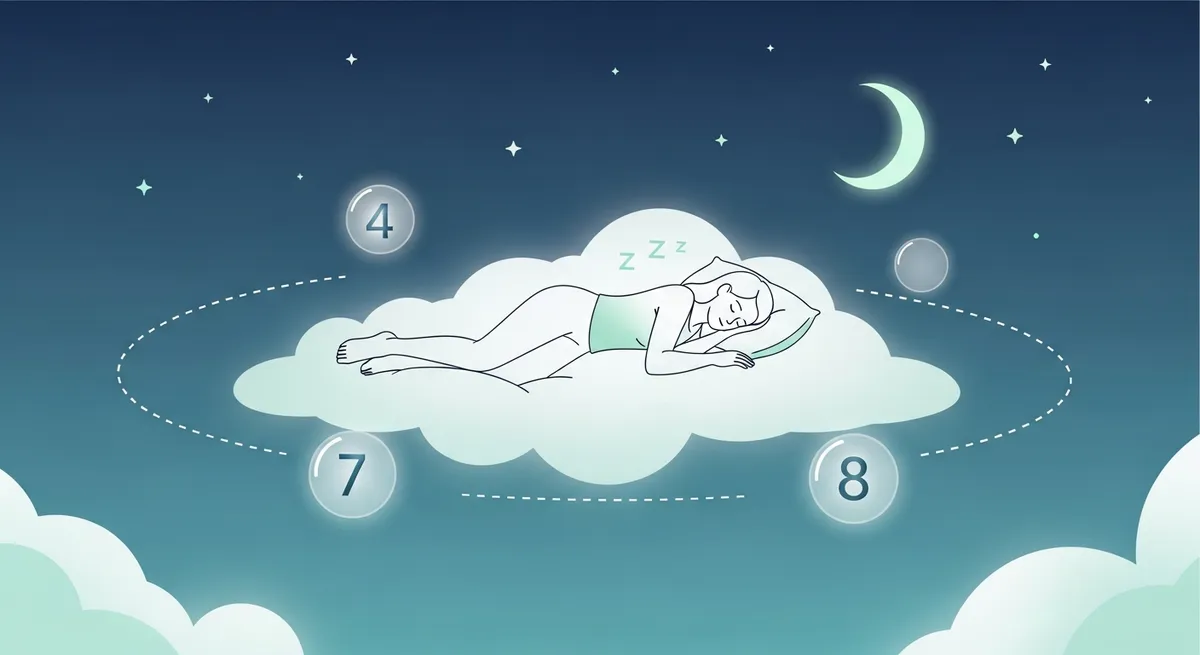
- Start with the 4-7-8 technique: inhale 4 seconds, hold 7 seconds, exhale 8 seconds. 3 cycles.
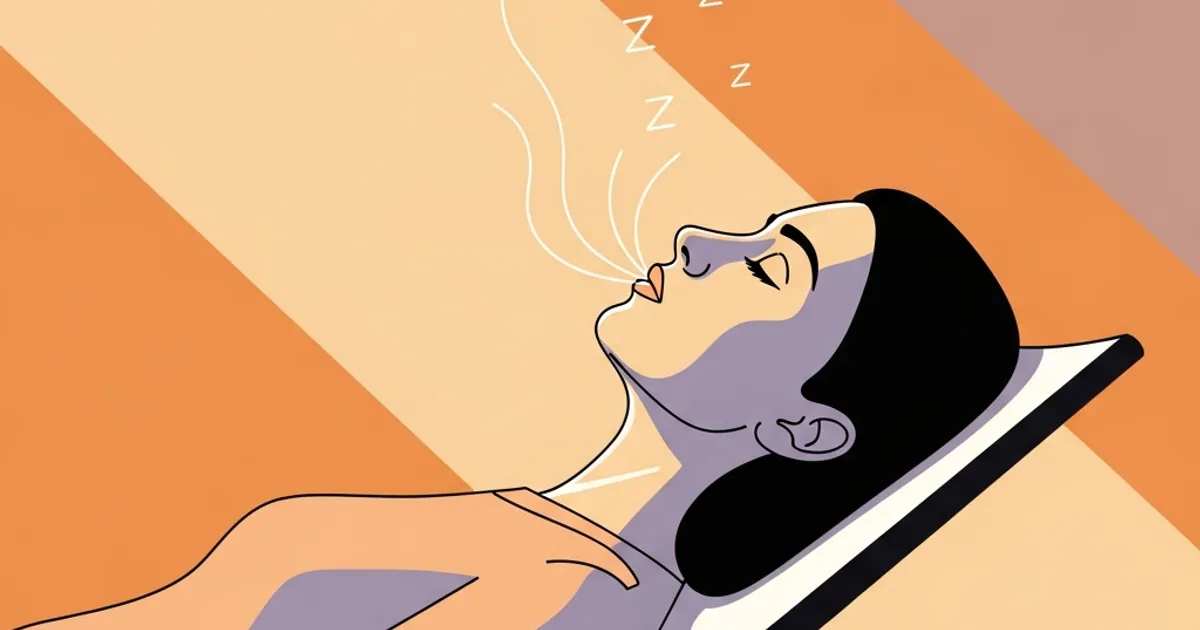
- Then switch to free, slow breathing: natural inhale, extended exhale, without counting. Let the rhythm slow naturally.
- Focus on the sensation of heaviness in your limbs. With each exhale, imagine your body sinking a bit deeper into the support.
Step 3: Letting go (5-15 minutes)
If you fall asleep, perfect. If you stay in a half-sleep state (between waking and sleeping), this calm, eyes-closed rest already brings useful relaxation, even if the alertness benefits are smaller than those of real sleep.
Step 4: Energizing wake-up (1 minute)
When the alarm sounds:
- 5 energizing breaths: fast, deep inhale through the nose, short exhale through the mouth. Like a bellows.
- Stretch slowly.
- Open your eyes and stand up gradually.
- If possible, expose yourself to bright light or take a few steps — this helps clear sleep inertia.
The best time for a power nap
The natural circadian dip falls between 1 PM and 3 PM. That's the ideal time — your body is biologically programmed for a break. Avoid power naps after 4 PM: they can disrupt nighttime sleep, especially if you also use breathing exercises for sleep in the evening.
The office power nap
No nap room? No problem. The "desk nap" combined with breathing is doable:
- Close your door (or put on headphones and a mask).
- Recline your chair fully or rest your head on crossed arms on the desk.
- Set your phone to vibrate at 15 minutes.
- Do the breathing descent (4-7-8 then free breathing).
- On waking, a few energizing office breathing exercises before resuming.
Conclusion
The breathing power nap isn't laziness — it's optimization. In a world that glorifies hyperactivity, allowing yourself 15 minutes of conscious recovery is a performance act. Breathing helps you turn this break into a real recovery pause. Try it for a week, between 1 and 3 PM: the results on your afternoon will convince you for good.