
Key takeaways
Conscious connected breathing, also known as rebirthing breathwork or circular breathing, is an intensive form of breathwork: you inhale actively, let the exhale fall out on its own, and link the two with no pause at all for 30 to 60 minutes, lying down, with a facilitator at your side. This voluntary hyperventilation lowers blood CO₂, shifts your state of consciousness and often triggers strong physical sensations and emotional release. It is not a relaxation exercise: it is a supervised practice with real contraindications.
- Origin: Leonard Orr's rebirthing in 1970s California; Stanislav Grof's holotropic breathwork is the most studied variant.
- Rhythm: active inhale, passive exhale, zero pause, often through the mouth, well above the 12 to 20 breaths per minute of resting breathing.
- Duration: 30 to 60 minutes of active breathing followed by 15 to 30 minutes of integration; a full session lasts 1.5 to 3 hours.
- Science: a meta-analysis of 12 randomized controlled trials (785 participants) found a moderate effect of breathwork on stress (Fincham et al., 2023), but trials on connected breathing itself remain scarce.
- Safety: only with a trained facilitator, never alone, never in water, never while driving; contraindicated in pregnancy, epilepsy, cardiovascular disease and psychiatric conditions.
What is conscious connected breathing (rebirthing)?
The word rebirthing comes from Leonard Orr. In the early 1970s in California, he experimented with long sessions of continuous breathing, first in a hot tub, then on dry land. Some participants described sensations they linked to their own birth, hence the name. Orr formalized a method: full, uninterrupted breathing, lying down, in the presence of a companion he called the rebirther. The vocabulary has since moved on: people now say conscious connected breathing or circular breathing to describe the technique without its symbolic baggage.
Around the same time, psychiatrist Stanislav Grof, no longer able to continue his LSD research, developed holotropic breathwork with Christina Grof: breathing faster and deeper than normal, carried by loud music, in a group where each breather is paired with a "sitter," followed by mandala drawing and sharing. Other schools built on the same principle: Jim Leonard's gentler Vivation (1979), Transformational Breath, various "breath therapies." All share the foundation described in our article on the origins and benefits of breathwork.
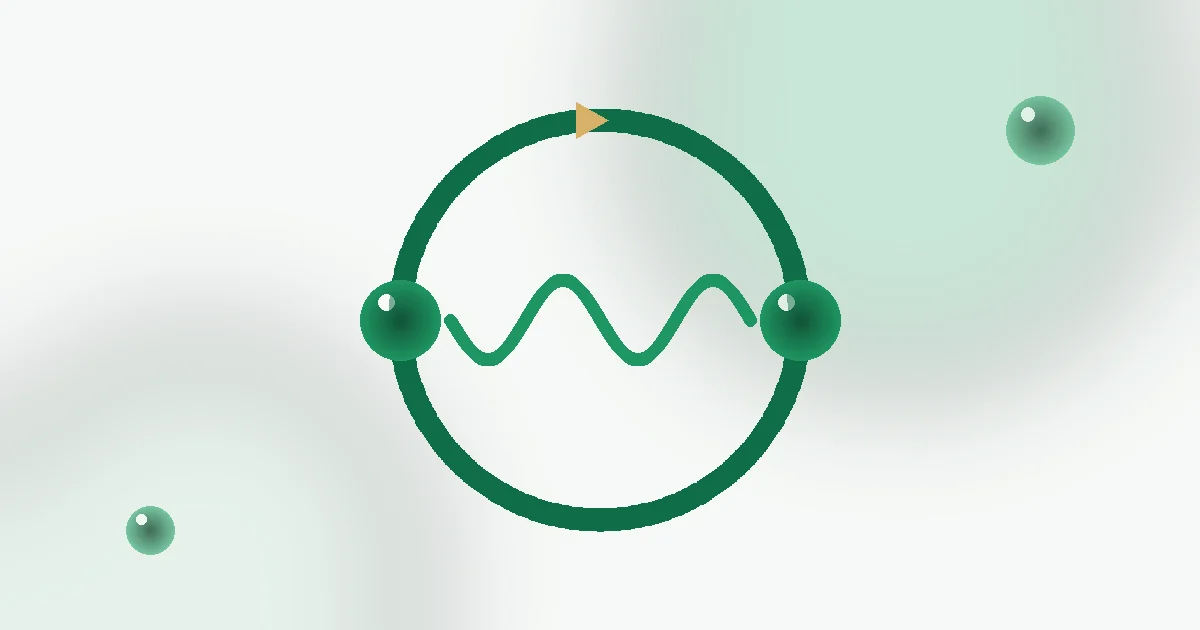
Three things set connected breathing apart from neighboring techniques. Continuity: no pause at the top or bottom of the breath, like a wheel turning. Duration: 30 to 60 minutes, where a typical exercise lasts a few minutes. Setting: lying down, eyes closed, with someone watching over you. The Wim Hof method, often confused with it, alternates rounds of 30 to 40 breaths with holds on empty lungs; connected breathing never stops.
Physiologically, breathing more than your body needs for half an hour is voluntary hyperventilation. Blood CO₂ drops, pH rises (respiratory alkalosis), cerebral blood vessels constrict and ionized calcium falls, which explains the tingling, the cramping hands and the lightheadedness. The same mechanism lowers the emotional threshold. Our article on CO₂ as a health ally explains why this gas regulates so much in the body.
What happens in a supervised connected breathwork session
This section describes a facilitated session. It is not a tutorial for practicing alone: conscious connected breathing is done with a trained facilitator, and that is a condition, not a suggestion.
- Preparation. The facilitator asks about your health (heart, blood pressure, epilepsy, pregnancy, psychiatric care, medication) and your intention. You lie on your back under a blanket in a quiet room, often with soft music.
- Activation (10 to 20 minutes). You set up the rhythm: active inhale, fairly high in the chest, exhale released without pushing, no pause. The first sensations arrive: warmth, tingling in the hands and around the mouth, a mild buzz.
- Processing (20 to 40 minutes). Sensations intensify; emotions may surface (tears, laughter, anger, fear), along with images. The hands may cramp; the facilitator invites you to slow down or soften, never to push harder. They remind you to relax your jaw, neck and shoulders, and suggest a big sigh every few minutes.
- Integration (15 to 30 minutes). You stop breathing actively and let the breath become automatic again. The tingling fades, and many people describe a deep calm. You get up slowly.
- Sharing. Talking, writing or drawing helps put words on the experience. Plan nothing demanding afterward, and do not drive right away.
The facilitator does not steer the experience, they hold it: they watch every breath, keep the body relaxed, bring the rhythm back when it drifts, and stay present without interpreting. BreathLife's founder attended a three-day workshop in Vienna in October 2026 with Dan Brulé, a breathwork pioneer since the 1970s, with connected breathing sessions practiced in pairs, taking turns as breather and sitter. You learn as much from sitting as from breathing.
Common mistakes: forcing the exhale (it should drop), breathing with the neck and shoulders, getting up too fast, arriving after a sleepless night or alcohol, and trying to "achieve" an emotional release. It happens, or it does not; a session without tears is not a failed session.
Forms of connected breathing: rhythm, duration, intensity
Unlike BreathLife exercises, connected breathing is not dosed in seconds by level: the facilitator sets tempo and depth based on what they observe.
| Form | Rhythm | Active duration | Intensity | Setting |
|---|---|---|---|---|
| Rebirthing (Leonard Orr) | Active inhale, passive exhale, no pause; mouth or nose | 45 to 60 min | High | Lying down, one-on-one with a rebirther |
| Holotropic (Stanislav Grof) | Faster and deeper than normal, loud music | 2 to 3 h | Very high | Group, breather / sitter pairs, mandala and sharing |
| Vivation (Jim Leonard) | Connected, supple, volume and speed adapted to sensations | 20 to 60 min | Moderate | Lying or seated, one-on-one |
| Gentle nasal connected breathing | Connected with no pause, mouth closed, tempo close to natural | 10 to 20 min | Low to moderate | Supervised introduction, a doorway to the longer formats |
Your CO₂ tolerance partly determines what you will feel. The BreathLife breathing age test measures, after a normal exhale, the time until the first urge to breathe (60 s max). As a rough guide: under 10 s, Strained; 10–15 s, Tired; 15–20 s, Optimal; 20–25 s, Efficient; over 25 s, Exceptional, with exact thresholds adjusted for age. The shorter that time, the sooner hyperventilation brings dizziness and cramping: at the Strained or Tired level, favor the gentler forms and tell your facilitator.
What people feel and what the science actually says
What practitioners describe
Accounts of a connected breathwork session follow a similar arc. First the body: tingling, heat or chills, vibrations, hands and lips that tighten. Then a different mental state: time stretches, thoughts slow down, images or memories appear, emotions become intense. Finally, after the session, a calm or clarity that lasts from a few hours to a few days. We devoted one article to breathing-induced altered states and another to emotional release through breathwork.
What the studies measure
The literature is thinner than the popular conversation suggests. The meta-analysis by Fincham and colleagues (2023, Scientific Reports) pooled 12 randomized controlled trials, 785 participants: breathwork reduced perceived stress with a moderate effect size (around -0.35), along with anxiety and depressive symptoms. But most of those trials involved slow breathing, and the authors stress the small samples and risk of bias. In a review of high-ventilation practices (holotropic, rebirthing, connected breathing, Wim Hof), the same team (Fincham et al., 2023, Neuroscience and Biobehavioral Reviews) notes reported effects on mood and states of consciousness, proposes hypocapnia and sympathetic activation as mechanisms, and points out that controlled trials are lacking and that adverse effects are real.
On the holotropic side, Rhinewine and Williams (2007) proposed this prolonged hyperventilation as a possible adjunct to psychotherapy, laying out the physiological cascade set off by the drop in CO₂, while acknowledging the absence of rigorous trials. Miller and Nielsen (2015), following 20 participants before and after a series of sessions, reported changes in character consistent with greater self-awareness, without a control group. Finally, Gardner (1996) describes the physiology of hyperventilation: hypocapnia, alkalosis, cerebral vasoconstriction, tingling and tetany, and how overbreathing can become self-sustaining in anxious people.
Reported adverse effects
Common and benign: hand tetany, dizziness, headache, fatigue the next day. Less common but serious: fainting, a panic attack that does not subside, reactivation of a trauma without the resources to process it and, in vulnerable people, episodes of confusion or psychological decompensation reported by practitioners. These breathwork risks are the reason the container exists: the facilitator, the screening and the integration time are not optional extras.
Who it is for, contraindications and warning signs
Conscious connected breathing is for healthy, psychologically stable adults who have a reason to go there and who accept being accompanied. It is not a daily stress-management tool: for that, slow techniques work better and carry no risk.
The contraindications are firm, because the technique lowers CO₂, raises heart rate and blood pressure, and can cause loss of consciousness:
- pregnancy;
- epilepsy or a history of seizures;
- cardiovascular disease, uncontrolled high blood pressure, history of stroke or aneurysm;
- glaucoma or retinal detachment;
- current psychiatric conditions, history of psychosis, unstable bipolar disorder, severe panic disorder;
- recent surgery or injury;
- severe asthma, COPD or any respiratory disease that is not under control.
Three rules allow no exceptions: never alone, never in water (hypocapnia removes the alarm signal before you black out), never while driving or before driving. During the session, the warning signs that call for slowing down, switching to the nose or stopping: chest pain, cramps spreading beyond the hands, blurred vision, confusion, panic that builds instead of passing. Afterward, stay on site for at least 30 minutes, drink, eat, and keep someone to talk to in the following days.
BreathLife is not a medical device; if you have a respiratory or heart condition, are pregnant or have epilepsy, ask your doctor, and tell your facilitator about any psychological care.
Connected breathing vs. gentle techniques: how they compare
| Technique | Rhythm | Dominant effect | Best time |
|---|---|---|---|
| Conscious connected breathing (rebirthing) | Continuous, no pause, 30 to 60 min, lying down, facilitated | Hyperventilation, altered state, emotional release | Supervised session, never alone |
| Cardiac coherence | 5 s in, 5 s out, 6 breaths per minute, 5 min | Stress regulation, high heart rate variability | Three times a day |
| Extended exhale (1:2 ratio) | 4 s in, 8 s out, 10 cycles | Quick settling, vagus nerve | After an upset, before bed |
| Box breathing 4-4-4-4 | Inhale, hold, exhale, hold, 4 s each, 6 cycles | Focus, steady calm | Before a demanding task |
The gentle techniques maintain or slightly raise CO₂, which is why they calm; connected breathing does the opposite, on purpose. Many facilitators recommend a daily slow practice between intensive sessions, to build CO₂ tolerance.
Why BreathLife does not guide connected breathing
The BreathLife app does not offer a connected breathing session, and that is a deliberate choice. An app cannot check your contraindications, see your hands cramp or bring you back if the experience overflows; that is exactly what a facilitator does. BreathLife focuses on gentle exercises calibrated to the level measured by your test: "Steady Heart" (cardiac coherence), "Let Go" (extended exhale), "Instant Calm" (box breathing), in 3-, 5- or 10-minute sessions, with a guided voice and a daily streak. On Sundays at 8 p.m., a group session brings users together around the same exercise: a shared breath, with no hyperventilation.
Conclusion
Conscious connected breathing is a powerful practice, not one wellness exercise among many. Its principle is simple, breathe in and let go without ever stopping, but its effects rest on prolonged hyperventilation that changes blood chemistry and the state of consciousness. The studies suggest benefits for mood and stress, with evidence that is still fragile and adverse effects that are documented. If the experience appeals to you, find a trained facilitator and accept the container. And to know where you are starting from, measure your CO₂ tolerance with the free breathing age test: one minute is enough.