
Introduction: the man who defied science
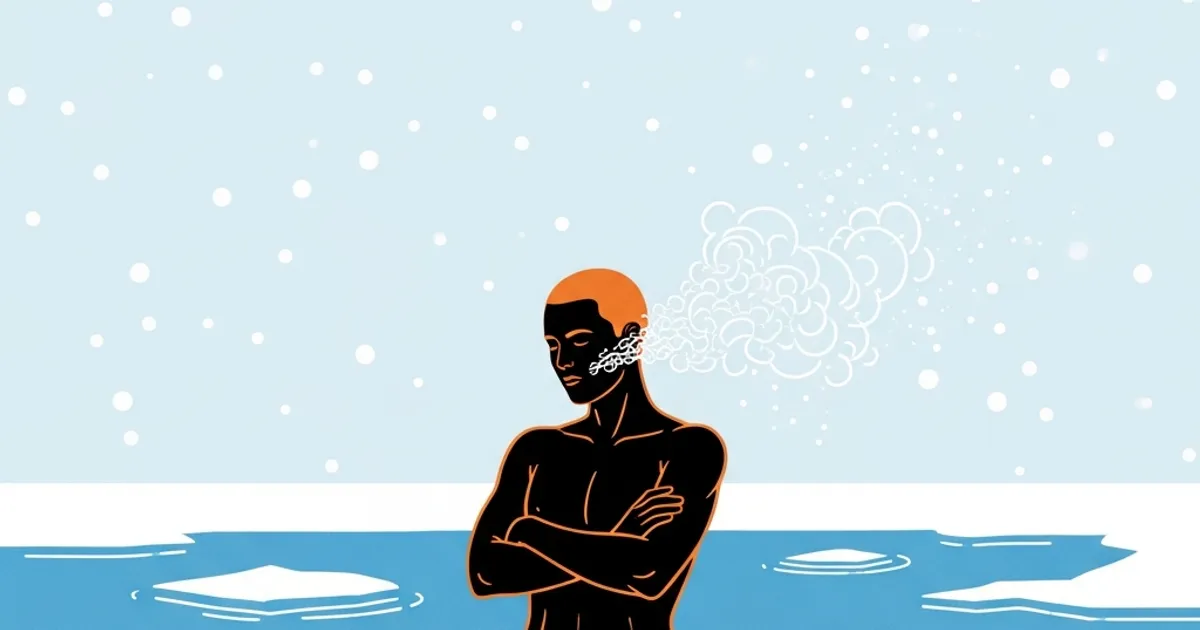
Wim Hof — nicknamed "The Iceman" — is a Dutchman known for his many extreme-cold records: a barefoot half marathon above the Arctic Circle, swimming under ice, nearly 2 hours in contact with ice. But what truly surprised the scientific community was what was measured in the lab: with his method (breathing, cold exposure, and meditation), trained volunteers dampened their inflammatory response — when this system was thought to be beyond voluntary control.
Since then, the Wim Hof Method has been studied notably at Radboud University (Netherlands) and Wayne State University (USA), and it has become very popular worldwide. It rests on three pillars: breathing, cold exposure, and meditation. Here's the complete guide to his breathing technique.
The breathing technique step by step
Preparation
- Lie down or sit comfortably. Never in water, never while driving.
- Your stomach shouldn't be full (practice fasting or 2 hours after a meal).
- Allow 15-20 uninterrupted minutes.
Phase 1: The 30 breaths
- Inhale deeply through the nose or mouth, filling first the belly, then the chest, to maximum.
- Exhale passively through the mouth — don't force, just let the air out.
- Repeat 30 times at a steady rhythm (about 2 seconds per cycle).
- You'll feel tingling in hands and face, mild euphoria: this is normal. It's the effect of respiratory alkalosis (increased blood pH due to CO₂ decrease).
Phase 2: Empty lung retention
- After the 30th exhale, breathe out all air and hold your breath with empty lungs.
- Time it, without forcing: around 1 minute is common for beginners, and the hold often lengthens with practice. It's not a competition.
- Stay calm and relaxed. The urge to breathe will come — observe it without panicking.
Phase 3: Full lung retention
- When you can't hold any longer, inhale deeply and hold with full lungs for 15 seconds.
- Exhale slowly. That's the end of the first cycle.
Repetitions
Do 3-4 complete cycles. Retention times naturally increase with each cycle — often by 30 seconds to 1 minute between the first and last.
What science has proven
The Radboud study (2014)
The landmark study (Kox et al., 2014, PNAS): researchers at Radboud University Nijmegen injected a bacterial endotoxin (E. coli) into 24 healthy volunteers — 12 trained for 10 days in the Wim Hof method (breathing, cold, meditation), 12 untrained. Results:
- The Wim Hof group showed a sharp rise in adrenaline during the breathing exercises.
- Their inflammatory markers (TNF-α, IL-6, IL-8) were lower and their anti-inflammatory cytokine (IL-10) higher.
- They showed fewer flu-like symptoms.
Conclusion: this training makes it possible to voluntarily influence the innate immune system's response in the lab. Whether it protects against infections or disease in daily life is not yet known.
Effects on the nervous system
The hyperventilation phase powerfully activates the sympathetic nervous system (adrenaline, noradrenaline). Breath retention and the calm that follows then engage the parasympathetic side. Some see this as training for autonomic nervous system flexibility — your ability to switch between action and rest — a hypothesis that remains little studied.
Effects on mental well-being
A few small studies suggest lower stress and better mood among practitioners, but the evidence remains preliminary. The euphoria felt during practice is largely explained by hyperventilation (lower CO₂) and the adrenaline surge. The method has contributed to growing research interest in breathing.
Cold exposure: the second pillar
Wim Hof breathing prepares the body to tolerate cold. The exposure protocol is progressive:
- Week 1-2: end your showers with 30 seconds of cold water.
- Week 3-4: increase to 1 minute.
- Week 5-8: 2 minutes, progressively colder water.
- Advanced: ice baths (2-5 minutes), under supervision.
Important: always do the breathing before cold exposure, never during (risk of syncope in cold water).
Safety and contraindications
The Wim Hof method is not without risks. Safety rules are imperative:
- Never in water (bath, pool, sea). Loss of consciousness is possible and drowning is the main risk.
- Never while driving or operating machinery.
- Contraindicated: epilepsy, pregnancy, uncontrolled heart problems, untreated hypertension.
- Stop immediately if you feel faint, have blurred vision, or significant loss of sensation.
- Start gradually: 20 breaths the first times, not 30.
Conclusion
The Wim Hof method is one of the most intense and most publicized breathing techniques in the world. Its effects on the inflammatory response have been measured in the lab, and many practitioners report more energy and less stress. But it demands respect: it's an intense tool that must be practiced safely and progressively. If gentler techniques like cardiac coherence are the yoga of breathing, the Wim Hof method is its CrossFit. Both have their place — it's up to you to choose based on your goals.