
Introduction: the CO₂ misunderstanding
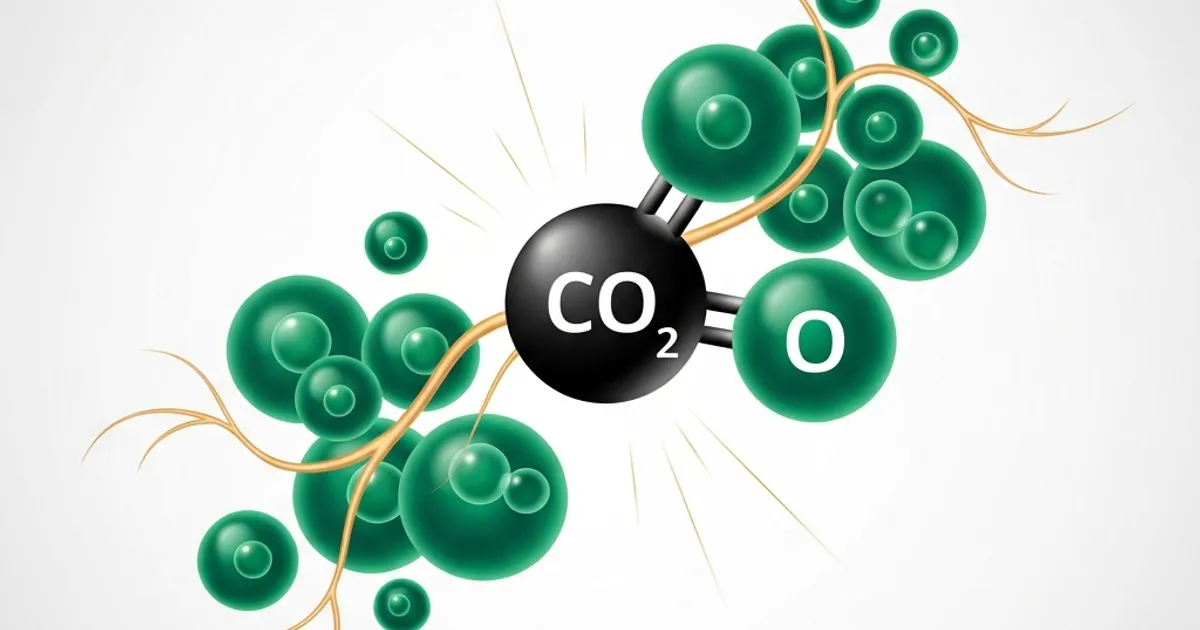
When someone says "carbon dioxide," you probably think "pollution," "greenhouse gas," "waste." In the environmental context, that's understandable. But in your body, CO₂ is something entirely different: it's an essential regulator without which your cells can't receive the oxygen they need. Paradoxically, breathing "too much" — which most stressed people do — reduces your CO₂ levels and decreases tissue oxygenation.
This is one of the most counter-intuitive concepts in respiratory physiology, and understanding it radically changes how you approach breathing.
The Bohr effect: CO₂'s key role
In 1904, Danish physiologist Christian Bohr (father of physicist Niels Bohr) made a fundamental discovery: hemoglobin releases oxygen more easily when sufficient CO₂ is present. This is the Bohr effect.
Simply put:
- Oxygen travels in your blood, attached to hemoglobin (in red blood cells).
- When blood reaches tissue needing oxygen, hemoglobin must "release" the O₂.
- What makes hemoglobin let go is the presence of CO₂ and local acidity.
- When CO₂ drops too low (hyperventilation), hemoglobin holds on to oxygen a little more tightly: your blood stays well saturated with O₂, but releases it less readily to tissues.
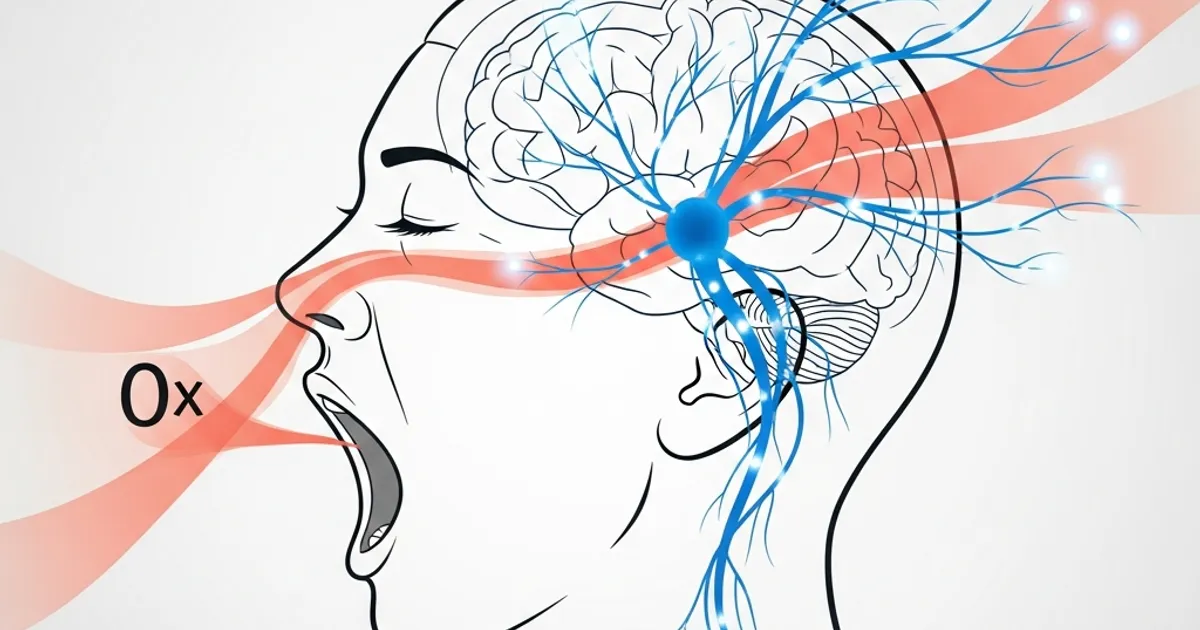
This is the central paradox: breathing more doesn't bring in more oxygen — at rest, blood is already almost fully saturated — and excessive breathing can even reduce oxygen delivery to some tissues, especially the brain. Calm breathing, without excess, is enough to oxygenate well.
Chronic hyperventilation: the modern plague
Hyperventilation isn't just the rapid, gasping breathing of panic attacks. Chronic hyperventilation is far more subtle: breathing slightly too fast or too much for the body's actual needs, often high in the chest, maintained throughout the day. Its effects:
- Decreased blood CO₂ (hypocapnia), reducing tissue oxygenation via the Bohr effect.
- Respiratory alkalosis (blood pH too high), causing fatigue, dizziness, tingling, mental fog.
- Constriction of the brain's blood vessels, reducing cerebral blood flow (hence dizziness and light-headedness).
- Increased neuromuscular excitability: tension, cramps, jaw clenching.
The causes? Chronic stress, sedentary lifestyle, mouth breathing, desk posture. A UK survey estimated that about 1 in 10 adults without asthma — and nearly 3 in 10 with asthma — show signs of dysfunctional breathing (Thomas et al., 2005), with symptoms often put down to "anxiety," "fatigue," or "brain fog."
CO₂ tolerance: a health marker
Your CO₂ tolerance — measurable via the BOLT test described in our breathing age article — reflects your breathing efficiency. A low score (under 15 seconds) may signal heightened CO₂ sensitivity: your body pushes you to breathe faster as soon as CO₂ rises slightly. It's a hyperventilation vicious cycle.
The good news: this tolerance is trainable. It's the principle behind the Buteyko method and many other approaches: by voluntarily breathing less and more slowly, you gradually accustom your body to slightly higher CO₂ levels, for calmer breathing. The evidence is still limited: the Buteyko method has mainly been studied in asthma, with a few trials showing encouraging but inconsistent results, and its CO₂-based mechanism is unconfirmed (Bruton and Lewith, 2005).
CO₂'s other roles
Beyond the Bohr effect, CO₂ plays other essential roles:
- Vasodilator: CO₂ dilates blood vessels, improving circulation. That's why carbonated baths (CO₂-enriched water) are used in balneotherapy for circulatory disorders.
- Bronchodilator: it relaxes bronchial smooth muscles. Hyperventilation, by reducing CO₂, can promote airway narrowing — one of the proposed explanations for why some asthmatics who learn slow nasal breathing see their symptoms decrease (alongside their treatment).
- Blood pH regulator: the CO₂/bicarbonate buffer system maintains blood pH in the vital 7.35-7.45 range. Any disruption (from hyperventilation or hypoventilation) has systemic consequences.
- Nervous system stabilizer: CO₂ that drops too low increases nerve and muscle excitability (tingling, cramps). Slow, unforced breathing avoids that drop, which contributes to its calming effect — as does diaphragmatic breathing before bed.
How to increase your CO₂ tolerance
1. Breathe through your nose, all the time
Nasal breathing naturally imposes a slower rhythm and lower air volume than mouth breathing. Result: you retain more CO₂. Start with simple observation: how many times a day is your mouth open for no reason?
2. Slow your breathing
Aim for 6 breaths per minute (5 seconds inhale, 5 seconds exhale) — the cardiac coherence rhythm. Heart rate variability is generally highest around this pace (Lehrer and Gevirtz, 2014).
3. Progressive tolerance exercise
After a normal exhale, hold your breath without straining and walk slowly (avoid if pregnant or if you have a heart condition). Count your steps before feeling the first urge to breathe. With practice, you'll take more and more steps — a sign your tolerance is increasing.
Conclusion
CO₂ isn't your enemy. It's an essential biochemical partner without which oxygen can't reach your cells. Next time you feel stressed and your reflex is to "take a big breath in," do the opposite: exhale slowly, hold briefly, then inhale gently. Your body knows what it's doing — just don't interrupt it.