
Introduction: when breath opens the floodgates
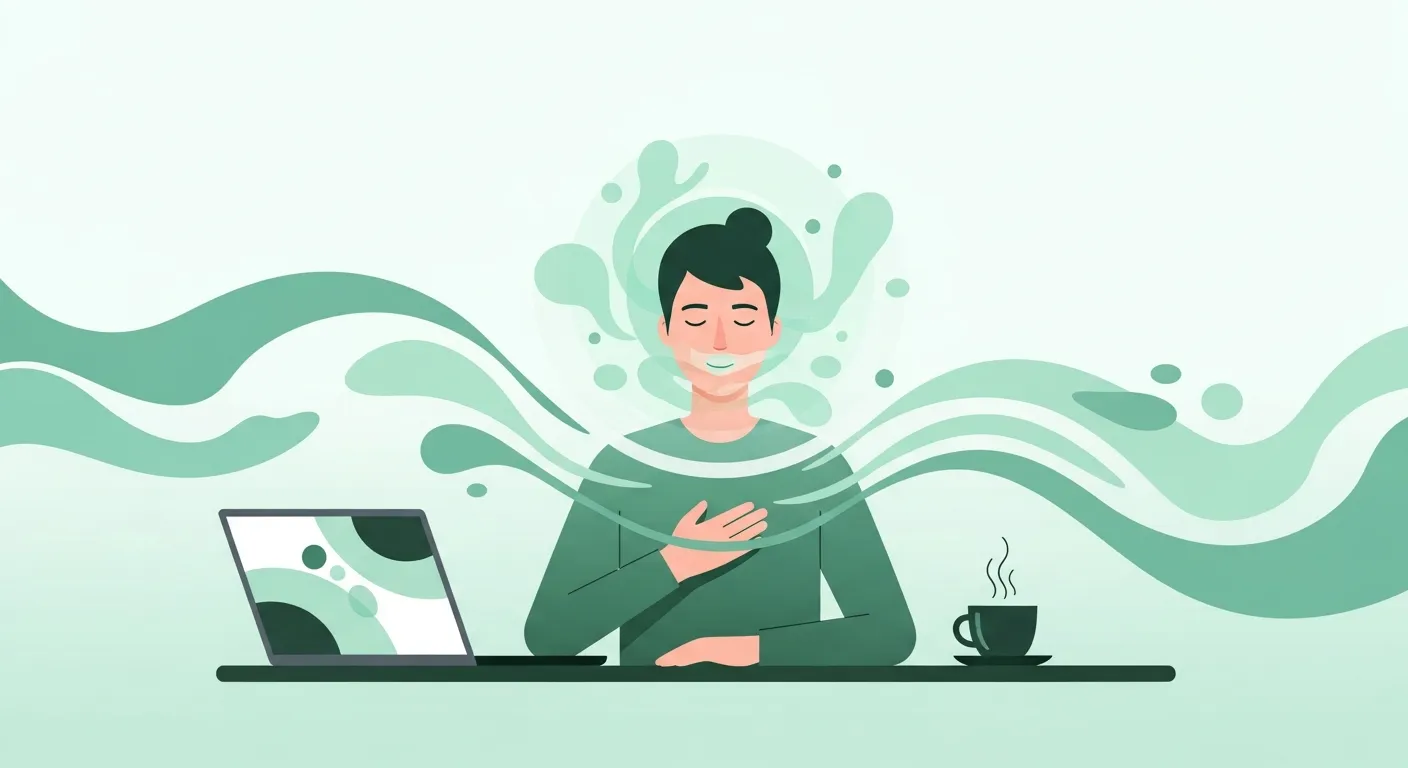
It's a familiar scene in yoga classes, breathwork sessions, or even at home during a simple breathing exercise: you've been breathing deeply for a few minutes, and suddenly, for no apparent reason, tears start flowing. Or uncontrollable laughter. Or trembling in your legs. Or a wave of anger surging from nowhere.
The first reaction is often surprise, then embarrassment. "What's wrong with me? I'm just doing a breathing exercise." In reality, nothing is "wrong" — everything is going exactly as planned. Deep, conscious breathing is one of the most powerful tools for accessing emotions stored in the body, and their release is a natural, healthy, and often profoundly therapeutic process.
The science behind emotional release
The body keeps the score
Psychiatrist Bessel van der Kolk popularized this idea with his groundbreaking book The Body Keeps the Score (2014): unexpressed emotions don't disappear — they're stored in the body as muscle tension, dysfunctional breathing patterns, and autonomic nervous system dysregulation.
When you're stressed, frightened, or angry, your body reacts immediately: the diaphragm contracts, breathing becomes thoracic and shallow, neck, shoulder, and back muscles tense. If the emotion is expressed (you cry, talk, run), the body releases and returns to balance. But if the emotion is suppressed ("be strong," "don't cry," "calm down"), the tension remains — sometimes for years, even decades.
The diaphragm: the emotional muscle
Wilhelm Reich, Freud's student and pioneer of body psychology, identified in the 1930s what he called "character armor": zones of chronic muscle tension that block emotions. The diaphragm is the most important zone of this armor.
The diaphragm instinctively contracts when we hold back emotions. A child holding back tears contracts the diaphragm. An adult "swallowing" anger does the same. Over years, this contraction becomes chronic — the diaphragm loses its mobility, breathing becomes shallow, and emotions remain trapped beneath this "concrete layer."
When deep, conscious breathing mobilizes the diaphragm — when it starts moving fully again after years of restriction — the emotions it was holding are literally "unlocked." This is why tears often arise during deep diaphragmatic breathing.
The autonomic nervous system and the window of tolerance
Dr. Stephen Porges (polyvagal theory) explains that our nervous system oscillates between three states:
- Ventral vagal (safety): we're calm, connected, open — our "window of tolerance."
- Sympathetic (threat): fight or flight — anger, anxiety, agitation.
- Dorsal vagal (collapse): freeze — dissociation, numbness, depression.
Unprocessed emotions make us oscillate between sympathetic and dorsal, avoiding the ventral state (safety). Conscious breathing gradually brings the nervous system back into the window of tolerance — and it's precisely in this state of safety that trapped emotions can finally be felt and released.
Different emotional reactions
Crying
This is the most common reaction. Crying during breathwork usually isn't linked to a specific sad thought — it "just happens." It's a sign that the autonomic nervous system is discharging excess tension. Tears contain cortisol and other stress hormones — crying is literally an emotional detoxification process.
What to do: don't resist. Don't try to understand "why." Let tears flow while maintaining deep breathing. They'll stop naturally when the discharge is complete.
Laughter
Spontaneous laughter during breathwork is as common as crying. It can be gentle and joyful or loud and uncontrollable. It's often a sign of deep tension release — the body literally "shakes off" the tension.
What to do: laugh. Completely. Without restraint. Laughter is one of the most powerful release mechanisms in the human body.
Trembling
Trembling (in legs, arms, jaw) is a natural nervous system discharge mechanism. All mammals tremble after an intense stress episode (observe a dog after a scare) — humans are the only ones who suppress this reflex out of social shame.
Dr. Peter Levine (Somatic Experiencing method) showed that trembling allows the nervous system to "complete" the interrupted stress response. Deep breathing often triggers this natural process.
What to do: let it tremble. Don't contract muscles to stop it. Trembling stops on its own when discharge is complete — usually within a few minutes.
Anger
Surges of anger can arise during breathwork. The urge to scream, clench fists, hit a pillow. This is often old anger — boundaries that weren't set, injustices that weren't expressed.
What to do: express it safely. Clench fists. Make a deep sound from your belly. Hit a pillow. Don't internalize the rising energy.
Tetany
Tingling and stiffness in hands and feet (tetany) is common during hyperventilation techniques. It's an effect of respiratory alkalosis (blood CO₂ drop). It's not dangerous but uncomfortable.
What to do: slightly slow the breathing rhythm. Breathe into your hands (exhaled air contains CO₂ that rebalances the blood). Tetany disappears within minutes.
Emotional release protocols
Gentle protocol: breathing and body scan (15 min)
For beginners or when you sense intense emotions:
- Lie down, eyes closed, hands on belly.
- Breathe slowly through nose: 4 seconds inhale, 6 seconds exhale. 5 minutes.
- Body scan: mentally travel through your body from feet to head. At each tension zone you find, breathe "into" that zone — imagine the inhalation inflating the tense area and the exhalation releasing it.
- If an emotion rises, welcome it without judging. Maintain breathing. Let the emotion pass through the body like a wave — it has a beginning, a peak, and an end.
- Finish with 3 physiological sighs (double inhale + long exhale).
Intermediate protocol: connected breathing (20-30 min)
- Lie down, soft music without lyrics.
- Breathe through mouth, no pause between inhale and exhale. Inhale is active (fill belly then chest), exhale is passive (let air out).
- Maintain a rhythm slightly faster than normal for 15-20 minutes.
- When emotions or sensations arrive, don't stop. Breathing is the "vehicle" that carries you through the emotion. If you stop breathing, the emotion remains stuck halfway.
- After 15-20 minutes, gradually slow down. Switch to slow nasal breathing. Stay lying down 5-10 minutes.
After the session: integration
What you do afterward is as important as the session itself:
- Don't get up immediately. Stay lying down at least 5 minutes. The nervous system needs time to stabilize.
- Drink water. Deep breathing and crying are dehydrating.
- Write. Even a few words. Insights that emerge during breathwork can be transformative — but they fade quickly if you don't capture them.
- Be gentle with yourself. You just did deep emotional work. No intense exercise, no major decisions, no confrontational conversations in the hours that follow.
- Don't try to understand immediately. Emotions that emerge during breathwork aren't always "logical." You may cry without knowing why. That's normal — the body processes emotions differently from the rational mind.
When to be careful
Emotional release through breathing is generally safe and beneficial, but some situations require caution:
- Severe trauma (PTSD): if you've experienced major trauma, deep breathing can trigger flashbacks or dissociation. Practice with a trauma-trained therapist, not alone.
- Dissociative disorders: intense breathing can worsen dissociation. Favor gentle techniques (cardiac coherence, slow diaphragmatic breathing).
- If emotions become overwhelming: if you feel you're "losing control," slow breathing, open eyes, ground yourself (touch the floor, name 5 objects you see). Returning to normal nasal breathing calms the nervous system in 2-3 minutes.
Conclusion
Tears flowing during a breathing exercise aren't a sign of weakness — they're a sign that your body is doing exactly what it's designed to do: release. Breath is the key that unlocks emotions we've locked away in our bodies, sometimes since childhood. This process can be uncomfortable, surprising, even overwhelming — but it's also profoundly liberating. Next time tears flow during breathwork, don't wipe them away. Breathe through them. On the other side, there's space.
Emotional breathwork proves especially powerful for accompanying chronic pain — often linked to stored emotions — and for supporting an addiction recovery journey.