
Introduction: when breathing helps digestion
You may have noticed that stress ties your stomach in knots. That anxiety causes bloating. That meals eaten in a rush are poorly digested. This isn't a coincidence — it's physiology. Breathing and digestion are intimately connected through two fundamental mechanisms: diaphragm movement and the vagus nerve.
When you breathe correctly — meaning with the diaphragm — each inhalation literally massages your digestive organs. When you breathe poorly — with the upper chest — this internal massage is greatly reduced. The good news: a few minutes of conscious breathing before and after meals can improve your digestive comfort.
The anatomy of the breathing-digestion connection
The diaphragm: an internal masseur
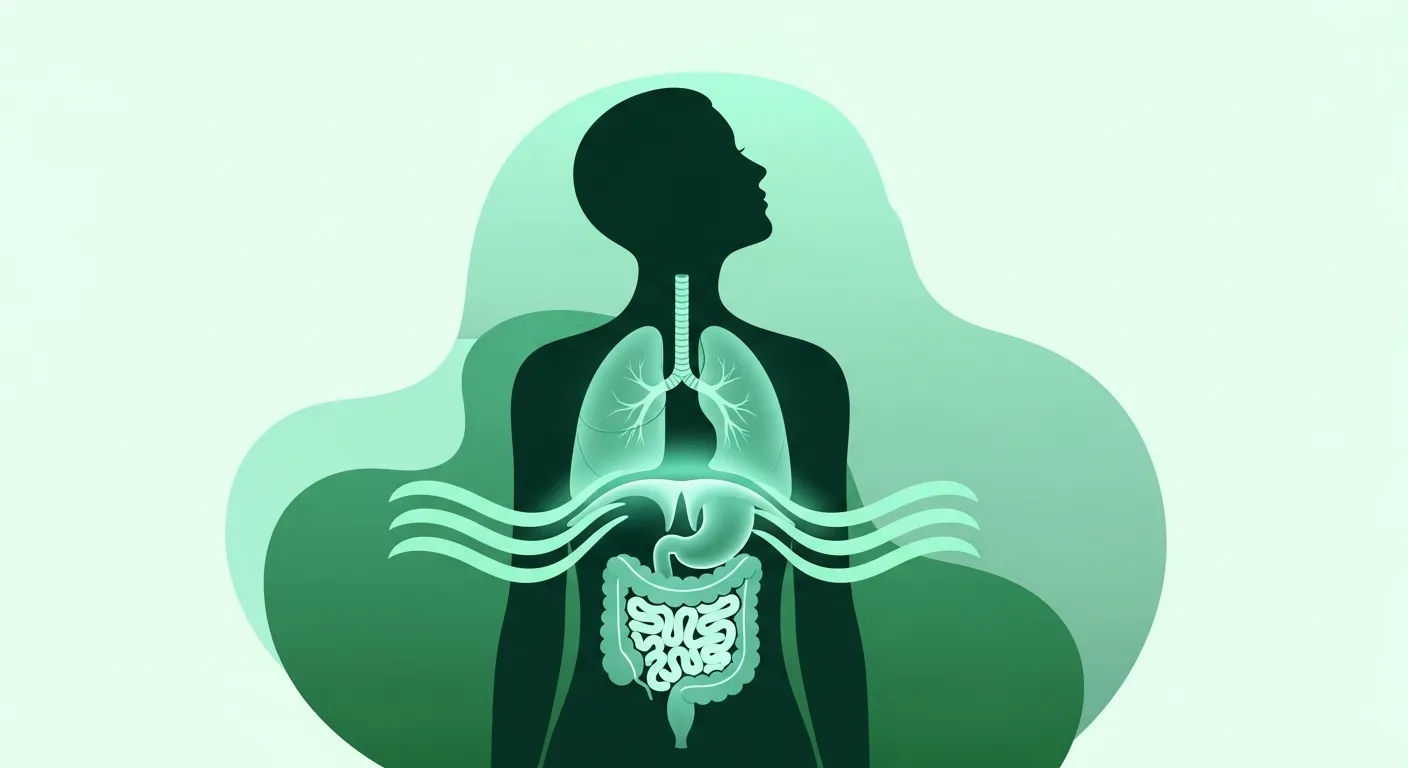
The diaphragm is a dome-shaped muscle that separates the rib cage from the abdominal cavity. Directly below it sit the stomach, liver, spleen, pancreas, and intestines. With each diaphragmatic breath:
- Inhalation: the diaphragm descends 3-5 cm, gently compressing the abdominal organs. This movement stimulates peristalsis (the contractions that move food through the digestive tract) and promotes blood circulation in the abdomen.
- Exhalation: the diaphragm rises, creating a "pump" effect that aids venous return and abdominal lymphatic drainage.
An adult breathes an average of 20,000 times per day. With diaphragmatic breathing, that's as many daily digestive massages; with chest breathing, this movement is much weaker.
The vagus nerve: the conductor of digestion
The vagus nerve is the main communication channel between the brain and digestive system. It controls:
- Gastric acid and digestive enzyme secretion.
- Peristalsis of the esophagus, stomach, and intestines.
- Bile production by the liver and gallbladder.
- Insulin secretion by the pancreas.
- Lower esophageal sphincter tone (anti-reflux).
The vagus nerve is the main pathway of the parasympathetic nervous system — "rest and digest" mode. When you're stressed, the sympathetic system dominates ("fight or flight" mode), and vagal activity decreases. Result: digestion slows down. This is why eating in a stressed state often promotes digestive problems.
Slow, diaphragmatic breathing is one of the simplest ways to engage the vagus nerve and therefore "wake up" your digestive system.
Digestive disorders linked to poor breathing
Gastroesophageal reflux disease (GERD)
The lower esophageal sphincter (LES) is the valve that prevents stomach acid from rising into the esophagus. This sphincter is directly innervated by the vagus nerve and mechanically reinforced by the diaphragm — the diaphragm's fibers surround the esophagus at the esophageal hiatus, creating a "pinch" that helps the LES stay closed.
When breathing is thoracic:
- The diaphragm doesn't descend enough to maintain pressure on the LES.
- The vagus nerve is understimulated, reducing sphincter tone.
- Stress increases acid production without improving protection.
A small randomized trial published in the American Journal of Gastroenterology (Eherer et al., 2012, 19 patients) showed that after 4 weeks of abdominal breathing exercises, time spent in acid reflux decreased and quality of life improved; patients who kept up the exercises were taking fewer antacid drugs (PPIs) 9 months later.
Irritable bowel syndrome (IBS)
IBS is one of the most common digestive disorders and manifests as abdominal pain, bloating, constipation, and/or diarrhea. Stress is a frequent trigger — and breathing is a direct interface between stress and the digestive system.
In a randomized trial in China (Liu et al., 2022, 85 patients with constipation-predominant IBS), 6 weeks of slow breathing at 6 breaths per minute reduced symptoms and increased vagal activity compared with the control group. Another small trial (Jurek et al., 2022), however, found no effect on symptoms after 4 weeks: the results still need confirmation.
Bloating and aerophagia
Mouth breathing and rapid breathing promote air swallowing (aerophagia), a common cause of bloating. Slow, nasal, diaphragmatic breathing helps limit it.
Constipation
Chronic constipation is sometimes linked to a less active parasympathetic nervous system, as intestinal peristalsis depends partly on vagal stimulation. In the Liu et al. (2022) trial, slow breathing increased the frequency of spontaneous bowel movements in patients with constipation-predominant IBS. If constipation persists, talk to your doctor.
Breathing protocols for digestion
Before meals: activate "digestion mode" (2 minutes)
This protocol prepares your digestive system to receive food:
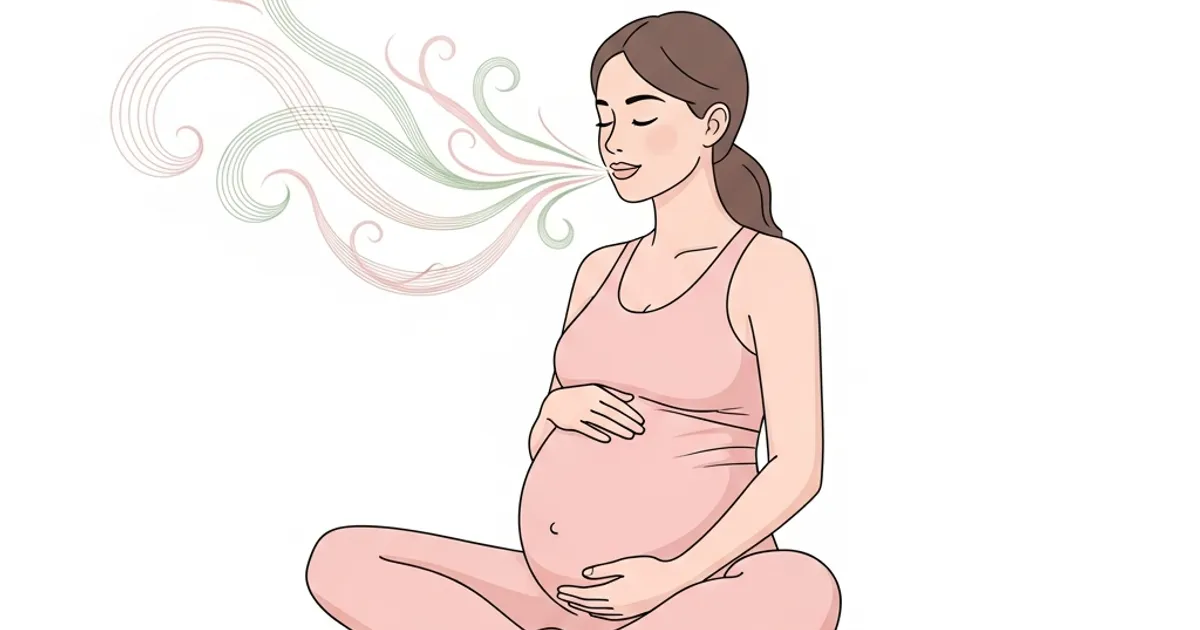
- Sit comfortably. Place both hands on your belly.
- Inhale through your nose for 4 seconds, inflating your belly under your hands.
- Exhale through your nose for 6 seconds, letting your belly naturally deflate.
- Repeat 12 cycles (2 minutes).
This 4:6 ratio engages the vagus nerve and promotes parasympathetic mode, which supports digestion. Eating in this state is very different from eating while stressed.
During meals: mindful eating
- Put down your utensils between each bite and take a complete nasal breath. This slows the meal pace and maintains vagal activation.
- Chew 20-30 times per bite. Chewing triggers saliva secretion, which contains amylase — the first enzyme for carbohydrate digestion.
- Avoid talking with your mouth full (aerophagia) and drinking large amounts of water during the meal (dilution of gastric juices).
After meals: the "digestive breath" (5 minutes)
- Sit or walk gently — don't lie down immediately.
- Practice diaphragmatic breathing with abdominal rotation: inhale by inflating the belly, then while exhaling, "roll" the belly clockwise (the direction of intestinal transit).
- Alternate with vagal humming: inhale through the nose (4s), hum while exhaling (8s). Humming vibrations stimulate the vagus nerve at the larynx.
- Practice for 5 minutes.
For bloating: "anti-gas" breathing
- Lie on your left side (to promote gas passage through the descending colon).
- Inhale deeply through your nose, inflating your belly (4s).
- Exhale slowly (8s) while gently pressing your belly with your hands.
- After 10 cycles, bring your knees to your chest and gently rock side to side for 1 minute.
The impact of posture on digestion
Posture directly affects the diaphragm and therefore digestion:
- Slouched sitting: the diaphragm is compressed, abdominal organs are squished, breathing becomes thoracic. This is the worst position for digestion.
- Sitting upright: the diaphragm can move freely, digestive massage happens naturally.
- Standing or light walking: gravity aids transit and walking stimulates peristalsis. A 15-minute walk after a meal is more effective than a digestif.
- Lying on the left side: several studies show less nighttime reflux when lying on the left side than on the right (Simadibrata et al., 2023). Helpful in case of reflux.
What the science says
The scientific evidence for the breathing-digestion connection is promising but still based on small studies:
- GERD: a 2012 randomized trial (American Journal of Gastroenterology, 19 patients) showed that after 4 weeks of abdominal breathing, time spent in acid reflux was nearly halved; at 9 months, patients who kept practicing were taking fewer proton pump inhibitors (PPIs).
- IBS: a 2022 randomized controlled trial (Frontiers in Neuroscience, Liu et al., 85 patients) showed reduced symptoms of constipation-predominant IBS after 6 weeks of slow breathing at 6 breaths per minute.
- Constipation: in the same trial, the frequency of spontaneous bowel movements increased in the breathing group compared with the control group.
- Gastric motility: in healthy volunteers, combining slow deep breathing with electrical vagus nerve stimulation increased stomach contractions (Frøkjaer et al., 2016); the effect of breathing alone in patients remains to be studied.
Conclusion
Next time you have bloating, heartburn, or that "stomach in knots" feeling, don't look at your plate first — observe your breathing. The connection between breath and digestion is one of the most neglected in human physiology. Two minutes of diaphragmatic breathing before each meal can improve your digestive comfort. It's free, safe for most people, and as old as medicine itself. If symptoms persist, see a doctor.
To explore further the body-breath connection, read our article on breathing and the microbiome — a gut-lung connection with surprising effects on immunity and mood.