
Introduction: when breath becomes a painkiller
Chronic pain — defined as pain persisting beyond three months — affects approximately 20% of the global population. Back pain, joint pain, migraines, fibromyalgia: it exhausts both physically and mentally. Painkillers, while sometimes essential, have well-known limitations: dependency, side effects, and decreasing effectiveness.
Over the past fifteen years, neuroscience research has highlighted a surprising complementary tool: conscious breathing. Not as a miracle cure, but as an intervention capable of modifying pain perception and calming the nervous system. A systematic review published in Pain (Jafari et al., 2017) concludes that slow, paced breathing is associated with less pain in some of the studies, while stressing that the evidence is still limited and the mechanisms poorly understood.
How breathing acts on pain
To understand breathing's effect on pain, you need to know three key mechanisms:
1. Vagus nerve activation
The vagus nerve is the conductor of the parasympathetic system — the "rest and repair" mode. When you exhale slowly, vagal activity rises and heart rate slows. The vagus nerve also helps control inflammation: this "inflammatory reflex," described by Dr. Kevin Tracey in 2002, was demonstrated mainly through electrical stimulation of the nerve; it is not yet known to what extent slow breathing is enough to activate it.
2. Calming the stress response
Stress amplifies pain, and slow, controlled breathing helps calm the stress response. A Stanford University study (Balban et al., 2023) showed that 5 minutes of daily breathing exercises for one month improved mood and lowered resting respiratory rate. To practice, cardiac coherence is a good starting point.
3. Top-down pain control
The brain has a "top-down" pain modulation system: it can amplify or attenuate pain signals depending on emotional context. Stress, fear, and anticipation amplify pain. Conscious breathing, by calming the stress reaction and bringing attention back to the body, can reduce this amplification. In other words: you're not changing the source of pain, but you're modifying how your brain interprets it.
Breathing techniques adapted for pain
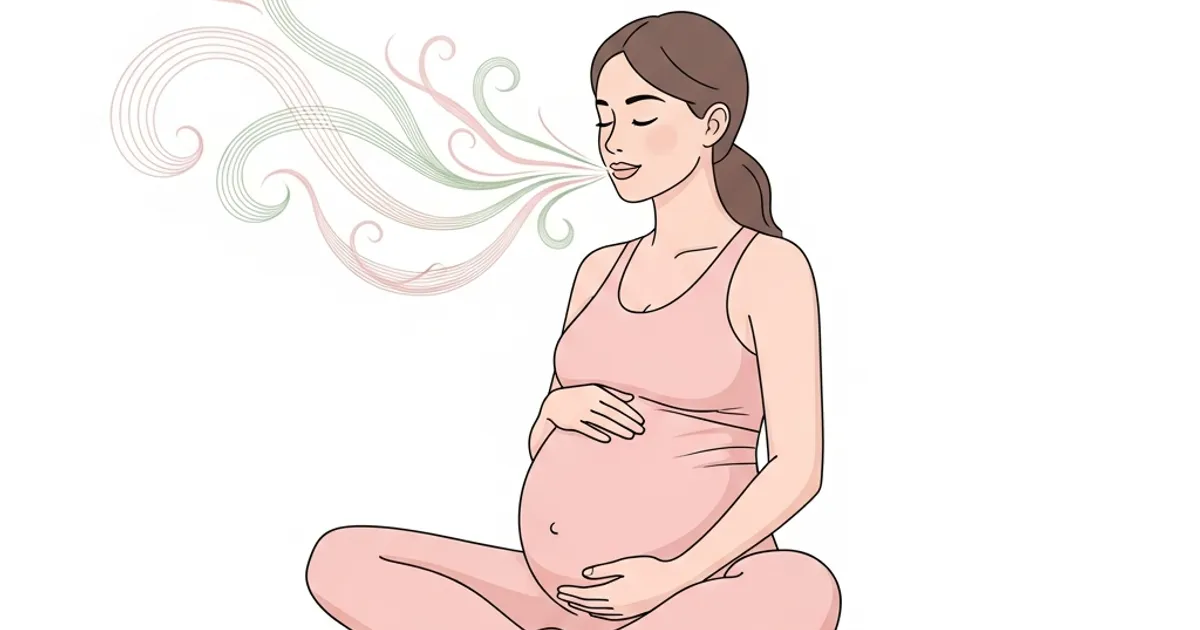
Slow diaphragmatic breathing
This is the foundational technique for pain management. Diaphragmatic breathing engages the main breathing muscle and supports vagus nerve activity.
- Inhale through your nose for 4 seconds, letting your belly expand.
- Exhale through your nose or mouth for 6-8 seconds.
- Repeat for 10 minutes, twice daily.
Extended exhalation is essential: it activates the vagus nerve and triggers the parasympathetic response.
Breathing with visualization
Combine slow breathing with visualization: on the inhale, imagine warm, soothing light directed toward the painful area. On the exhale, visualize the pain leaving as dark smoke. This technique, inspired by meditation, can deepen relaxation by diverting attention from pain signals.
Respiratory body scan
Lie down comfortably and breathe slowly. Scan your body from head to toe, directing your breath toward each area with the intention of relaxing it. When you reach the painful area, don't try to make the pain disappear — observe it with curiosity, without judgment, while maintaining deep breathing.
Daily protocol for chronic pain
Here's a progressive 4-week program:
Week 1: Awareness
- 3 × 5 minutes of diaphragmatic breathing daily (morning, noon, evening).
- Rate your pain level from 0-10 before and after each session.
Week 2: Deepening
- Increase to 3 × 7 minutes.
- Add visualization during sessions.
- Introduce a 10-minute body scan before bedtime.
Week 3: Integration
- 2 sessions of 10 minutes (morning and evening) + 1 body scan.
- Start using breathing "in the moment": when a pain flare hits, take 5 slow breaths before any other reaction.
Week 4: Autonomy
- Maintain 20 minutes of daily practice distributed freely.
- Explore other techniques like anti-stress breathing for crisis moments.
What the science says
The evidence is promising but still limited:
- A systematic review of 31 publications (Jafari et al., 2017, Pain) shows that pain speeds up and amplifies breathing, and that slow, paced breathing is associated with less pain in some of the studies; the authors call for more research.
- In an experiment with 16 healthy volunteers (Busch et al., 2012, Pain Medicine), slow deep breathing raised heat and cold pain thresholds only when practiced in a relaxed way — not when it required intense concentration.
- Zelano et al. (2016) showed that nasal breathing synchronizes activity in emotional brain regions (amygdala, hippocampus) — an effect that fades with mouth breathing. The link with pain remains to be established.
Precautions and limitations
Breathing does not replace medical treatment. It's a complement, not a substitute. Consult your doctor before modifying any treatment. Some pain conditions require specific management (emergencies, severe neuropathic pain). Breathing can also stir up emotions: if this happens, it's common and usually temporary. Welcome these reactions with kindness, as explained in our article on breathwork and emotions.
Conclusion
Conscious breathing doesn't make pain disappear with a magic wand. But it offers something precious: an always-available, free and well-tolerated tool that lets you regain some control over your pain experience. With regular practice, many patients report not only reduced intensity but, more importantly, a changed relationship with their pain — it stops being the enemy and becomes a signal you can listen to and modulate.