
Key takeaways
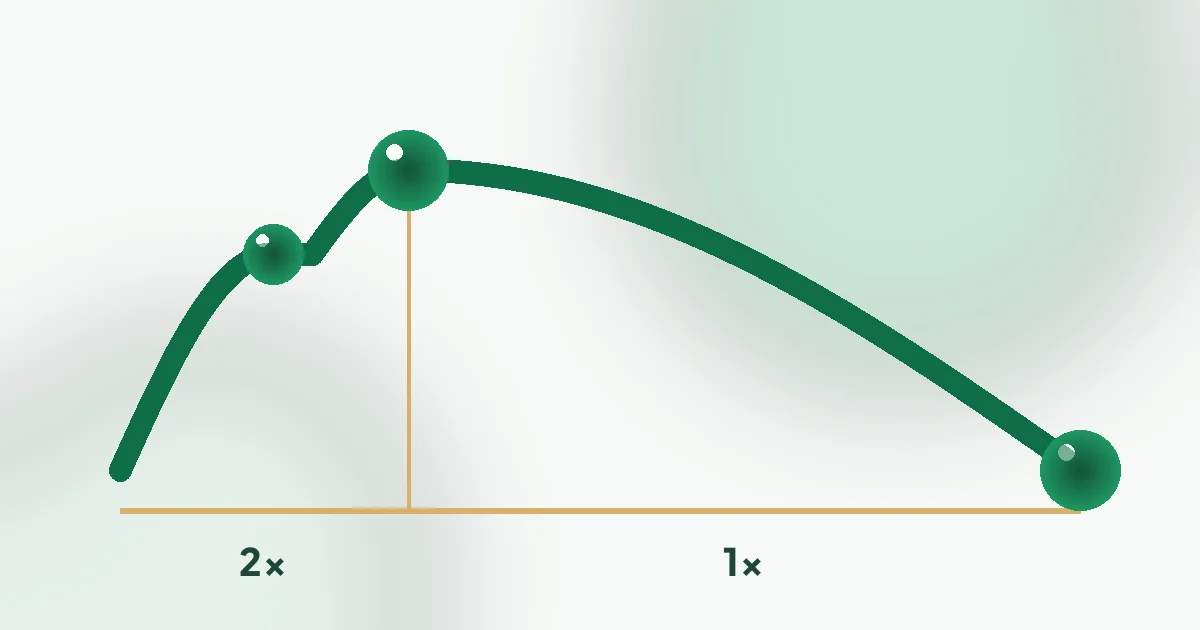
Three-part breath, known in yoga as dirga pranayama, fills the lungs in three stages: first the belly, then the ribs, then the upper chest. You then exhale slowly through the mouth, from the top down. It is a slow breathing exercise with no breath holds, designed to teach you to breathe low, where the diaphragm does the work, instead of the short, high breathing that comes with stress.
- 3 stages on the inhale: abdominal, thoracic, clavicular, always in that order.
- One cycle lasts 15 to 42 seconds depending on your level, which works out to 4 breaths per minute or fewer.
- 3 minutes is enough for a session: 3 to 10 cycles depending on your level.
- No breath holds: one of the gentlest techniques there is, and beginner-friendly from day one.
- Little dedicated research: the evidence comes from diaphragmatic and slow breathing, such as an 8-week trial by Ma and colleagues (2017).
What is three-part breath (dirga pranayama)?
Three-part breath comes from yoga. Its Sanskrit name, dirga pranayama (also spelled dirgha), combines dirgha, meaning "long," and pranayama, the umbrella term for breath-control practices. It is often one of the first techniques taught in a yoga class, before the more demanding practices covered in our complete guide to pranayama. You will also hear it called complete breath, full yogic breath, or the three part breathing technique.
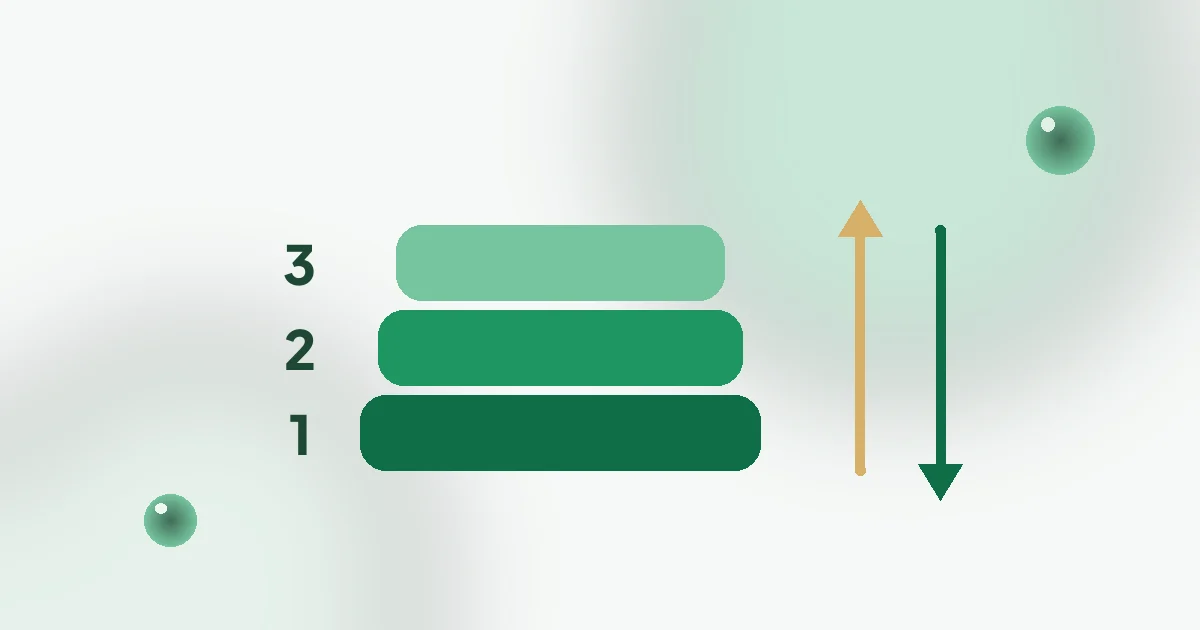
The idea fits in one picture: filling a pitcher with water. The water fills the bottom first, then the middle, then the neck. As you breathe in, the air seems to sink into the belly first, which rises; then the ribs widen out to the sides; finally the upper chest lifts slightly, just below the collarbones. On the exhale, the pitcher empties in reverse: top, ribs, then belly.
Belly, ribs, chest: three zones, one breath
Yoga manuals describe three types of breathing: abdominal, thoracic and clavicular. To be straightforward about it, your lungs don't actually fill in three separate compartments. The diaphragm and the muscles between your ribs work together through the whole inhale. The three parts are a sensory map. They teach you to feel where the air goes and to use your whole rib cage instead of getting stuck in one area.
That is what sets three-part breath apart from its neighbors. Diaphragmatic breathing stays in the belly and aims mainly at relaxation, with a long exhale. Clavicular breathing on its own is the opposite: the shallow, high breathing of stress, shoulders rising with every breath. Three-part breath starts in the belly like diaphragmatic breathing, then adds the expansion of the ribs and chest. The top is only a finishing touch; your shoulders stay put.
Dirga pranayama steps: how to do three-part breath
- Sit or lie down with a long spine and a relaxed neck. Lying on your back with knees bent makes it easier the first time.
- Place one hand on your belly and one on your chest. Your hands will tell you which part is filling.
- Breathe out once without forcing it, then inhale through your nose.
- Part one, the belly: let it rise under your lower hand. The hand on your chest barely moves.
- Part two, the ribs: feel them widen out to the sides, like an accordion opening.
- Part three, the upper chest: a small top-up of air under the collarbones, shoulders down.
- Exhale slowly through the mouth, top to bottom: the chest settles, the ribs draw in, then the belly gently falls.
Move from one cycle to the next without pausing, for 3 minutes to start. Always keep the order of the three parts; the order is the whole exercise. If you lose track, go back to just the belly for two or three breaths, then pick up all three again.
Common mistakes
- Starting with the chest. This is the default for tense people. If your top hand moves first, start over from the belly.
- Filling to the max. The last part is a light addition. Straining creates tension in the neck and can make you lightheaded.
- Shrugging. Your shoulders stay low from start to finish.
- Dumping the air. The exhale is slow and even, like a long, quiet sigh.
- Rushing. If you feel dizzy, shorten each part or drop down a level.
Three-part breath rhythms for every level
In BreathLife, each of the three parts gets the same count, so the full inhale is three times that count. The exhale follows in one smooth stretch. The better your CO₂ tolerance, the longer each part can be without discomfort.
| Level | Inhale (3 parts) | Exhale | Cycle length | Breaths per minute | Cycles in 3 min |
|---|---|---|---|---|---|
| Tight | 3 s × 3 = 9 s | 6 s | 15 s | 4 | 10 |
| Short | 4 s × 3 = 12 s | 8 s | 20 s | 3 | 8 |
| Optimal | 5 s × 3 = 15 s | 10 s | 25 s | 2.4 | 6 |
| Efficient | 6 s × 3 = 18 s | 14 s | 32 s | about 1.9 | 5 |
| Exceptional | 8 s × 3 = 24 s | 18 s | 42 s | about 1.4 | 3 |
These are very slow rhythms, well below the 6 breaths per minute of cardiac coherence. The goal is different: cardiac coherence aims for a steady rhythm for the heart, while three-part breath aims for fullness and body awareness. Note too that the three-stage inhale lasts longer than the exhale. This is an opening exercise more than a pure wind-down; for a more calming effect, diaphragmatic breathing flips the ratio with an exhale twice as long as the inhale.
How to pick your level
Your level comes from the 60-second breathing age test. After a normal exhale, you hold your breath and time it until the first urge to breathe, without pushing through. That time reflects your CO₂ tolerance. For adults under 40, as a rough guide: up to 12 s is Tight; up to 25 s, Short; up to 38 s, Optimal; up to 60 s, Efficient; beyond that, Exceptional. The thresholds drop with age: between 50 and 69, for example, they shift to 10, 18, 35 and 50 s.
A practical rule: if you reach the third part feeling stuffed, the rhythm is too long for you today. Drop a level. The right rhythm leaves a little room at every stage.
Three-part breath benefits: what the research says
Let's be upfront: there is almost no research on three-part breathing itself. Studies focus on its two main ingredients, diaphragmatic breathing and slow breathing. The three part breath benefits described below come from that work. They are plausible for this technique, but they have not been measured on it directly.
Breathing low: stress and attention
Ma and colleagues (2017) followed about forty healthy adults for 8 weeks. The group trained in diaphragmatic breathing (20 sessions) improved their sustained attention and reported less negative emotion; their salivary cortisol, a stress-related hormone, dropped compared with the control group. Hopper and colleagues (2019) then ran a systematic review of diaphragmatic breathing for stress in adults. Only three studies qualified, and they were too different to pool, but all three pointed the same way: less stress, measured by cortisol, blood pressure or a questionnaire depending on the study. The authors concluded that diaphragmatic breathing may reduce stress and called for more research.
Breathing slowly: the autonomic nervous system
A systematic review by Zaccaro and colleagues (2018) pulled together 15 studies on slow breathing (under 10 breaths per minute) in healthy adults. It linked that pace to higher heart rate variability (HRV), a marker of how flexibly your nervous system responds, more alpha activity on EEG, and lower self-reported anxiety and anger. Russo, Santarelli and O'Rourke (2017) explain the mechanics: at a slow pace, heart rate tracks the breath more closely, and the baroreflex, which regulates blood pressure, becomes more sensitive. The body shifts toward parasympathetic, rest-and-digest mode, driven largely by the vagus nerve.
Why fill the whole rib cage?
Jerath and colleagues (2006) put forward a hypothesis about slow, deep yogic breathing. Stretching the lung tissue would activate stretch receptors that send inhibitory signals to the nervous system and nudge the body toward a resting state. It is a theoretical model, not proof. Still, it offers a reason to fill up fully rather than halfway: depth may matter, not just pace.
Bottom line: studies suggest that breathing low and slow can help lower stress and sharpen focus. Three-part breath combines both ingredients and adds a skill, feeling the three zones of the breath. It does not replace any medical treatment.
When to use it, and three-part breath contraindications
Good times to practice
- When you catch yourself breathing high, shoulders tight, after a long day: three minutes to bring the breath back down. Our guide to breathing for stress management has more tools for those moments.
- At the start of a yoga class or any relaxation practice, to settle your breathing first.
- Before or after a workout, to reconnect with your whole rib cage.
- To learn belly breathing when the idea feels abstract: your hands do the teaching.
- In the morning, to start the day with a full, calm breath.
Contraindications and precautions
Three-part breath is one of the gentlest techniques around: no holds, no fast breathing. A few situations still call for adjustments. After recent abdominal or chest surgery, or a rib fracture, wait for your doctor's go-ahead. With asthma or COPD, keep each part short and stop if you feel uncomfortable. During pregnancy, especially late on, your belly has less room: go easy on the first part and check with your midwife or OB. In the middle of a panic attack, big inhales can fuel the spiral; focus on a long exhale instead. And if you feel lightheaded, you are taking in too much air: return to normal breathing.
BreathLife is not a medical device. If you have a respiratory or heart condition, are pregnant, or have epilepsy, ask your doctor first.
Three-part breath vs. related techniques
| Technique | Rhythm | Main effect | Best time |
|---|---|---|---|
| Three-part breath | 3-stage inhale, then slow exhale (e.g., 5 s × 3, then 10 s) | Fullness, breath awareness | Learning to breathe low, start of a practice |
| Diaphragmatic breathing | Belly only, exhale twice as long (e.g., 5-10) | Relaxation, lower stress | End of the day, when tense |
| Cardiac coherence | 5-5, inhale equals exhale | Steady heart rhythm, HRV | 3 times a day, 5 minutes |
| Ladder breathing | Inhale and exhale lengthen step by step, then come back down | Progression, breath control | Building capacity gently |
To see how these stack up against other techniques, read our complete guide to breathing exercises.
How BreathLife guides three-part breath
In the BreathLife breathing exercises app, three-part breath is called "Three Levels." Added in late October 2026, it is a variation on "Deep Reset" built to teach you to breathe low. A guided breathing voice in English or French calls out each part, belly, ribs, top, then the exhale, so you never have to count. The rhythm matches your level, and the session runs as many cycles as fit in the length you choose: 3, 5 or 10 minutes, with 3 as the default. The exercise is part of the Stress and Sport tracks, 28-day programs tuned to your level; the first session is free, no card required.
Conclusion
Three-part breath is easy to describe and rewarding to practice: belly, ribs, upper chest, then one long exhale. It retrains you to use all the room your breath has, starting from the bottom. No study has tested it on its own yet, but its two ingredients, diaphragmatic breathing and slow breathing, are linked in research to lower stress and better attention. Start with 3 minutes, hands in place, without forcing the last part. To find the rhythm that fits you, take the free breathing age test: it takes 60 seconds.