
Key takeaways
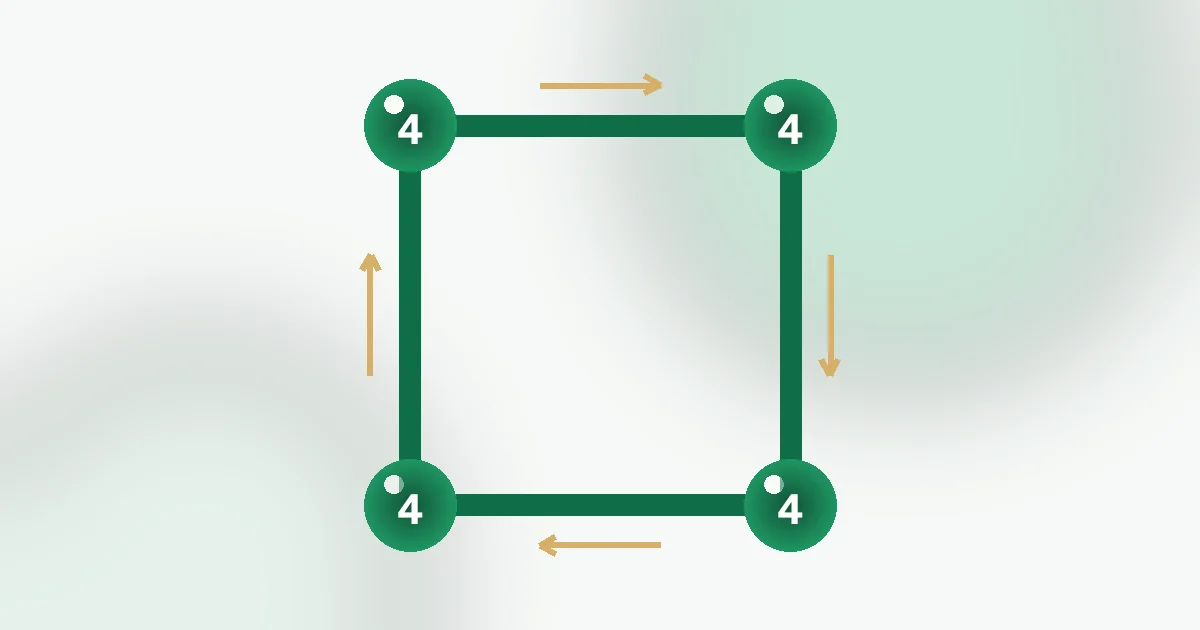
Box breathing is a breathing technique built on four equal phases: inhale for 4 seconds, hold for 4, exhale for 4, then hold with empty lungs for 4. This 4-4-4-4 breathing pattern slows your breath to fewer than 4 cycles per minute and settles the nervous system without making you drowsy. Popularized by the Navy SEALs, box breathing is done seated, through the nose, right before a test, a presentation, or a decision made under pressure.
- Pattern: 4-4-4-4, a 16-second cycle and roughly 3.75 breaths per minute (versus 12 to 20 at rest).
- Useful dose: 6 cycles are enough to feel the first shift, about 1.5 to 4.5 minutes depending on your level.
- Dominant effect: calm and alertness at the same time, unlike 4-7-8 breathing, which prepares you for sleep.
- What the science says: slow breathing (under 10 breaths per minute) raises heart rate variability and lowers anxiety markers across a review of 15 studies (Zaccaro et al., 2018).
- In BreathLife: the exercise is called "Instant Calm," scaled from 4-4-4-4 to 11-11-11-11 based on your measured level.
What is box breathing?
Box breathing gets its name from its shape: four sides of equal length. Every phase of the cycle lasts the same number of seconds, which is why it is also called square breathing or 4-4-4-4 breathing. In yoga, the pattern is a form of sama vritti pranayama ("equal breath") with two retentions added, one on full lungs and one on empty lungs.
Its modern form comes from military and law enforcement training. Known as tactical breathing or combat breathing, the 4-4-4-4 count is taught to keep hands steady and thinking clear in dangerous situations. Mark Divine, a retired Navy SEAL commander, later made it famous as box breathing through his mental training programs. That is why many people search for the "navy seal breathing technique" and land on this exact pattern.
Two things set it apart from neighboring techniques. First, the two holds: triangle breathing keeps only one (full lungs), and cardiac coherence has none. Second, the symmetry: 4-7-8 breathing stretches the exhale to push you toward sleep, while the box keeps all four sides equal. The result is a state many people describe as calm but ready.
How to do box breathing, step by step
- Get set. Sit with your back straight but not stiff, feet on the floor, hands on your thighs. Box breathing also works standing or walking, but learn it seated first.
- Exhale fully once through the mouth to start from empty, then close your mouth. Everything that follows happens through the nose.
- Inhale for 4 seconds through the nose, letting the belly expand first. Aim for a comfortable volume, not a maximum fill.
- Hold for 4 seconds with full lungs and a relaxed throat. Do not clamp the glottis shut; simply pause the breath.
- Exhale for 4 seconds through the nose at an even pace, without dumping the last of the air at the end.
- Hold for 4 seconds with empty lungs, then return to step 3. Repeat for 6 cycles, about a minute and a half. Breathe naturally for a few moments before standing up.
The most common mistakes: inhaling too hard (which makes the hold unpleasant), lifting the shoulders, breathing through the mouth, counting too fast, and above all starting with a count that is too long. If you feel the urge to gasp before the cycle ends, the pattern is too ambitious. Drop back to 4-4-4-4, or practice triangle breathing first.
Box breathing levels: which count should you use?
The 4-4-4-4 count is a starting point, not a rule. As your CO₂ tolerance improves, you can lengthen each side of the box. BreathLife offers five counts, one per level, always with 6 cycles.
| Level | Inhale | Hold | Exhale | Empty hold | Cycles | Approx. duration |
|---|---|---|---|---|---|---|
| Strained | 4 s | 4 s | 4 s | 4 s | 6 | 1 min 36 s |
| Tired | 5 s | 5 s | 5 s | 5 s | 6 | 2 min |
| Optimal | 7 s | 7 s | 7 s | 7 s | 6 | 2 min 48 s |
| Efficient | 9 s | 9 s | 9 s | 9 s | 6 | 3 min 36 s |
| Exceptional | 11 s | 11 s | 11 s | 11 s | 6 | 4 min 24 s |
How do you pick? The simplest way is to measure your CO₂ tolerance with the 60-second breathing age test: after a normal exhale, hold your breath and time it until the first urge to breathe. As a rough guide, under 10 s corresponds to Strained, 10 to 15 s to Tired, 15 to 20 s to Optimal, 20 to 25 s to Efficient, and over 25 s to Exceptional. Exact thresholds shift with age. If you have not taken the test, stay on 4-4-4-4 and only move up once all 6 cycles feel comfortable from start to finish.
There is also a variant that targets the hold more directly: Gentle Hold (4-4-4-8), a box whose empty-lung pause lasts twice as long. It puts more demand on CO₂ tolerance and is meant for people who are already comfortable with the standard box.
Box breathing benefits: what the science says
Slow breathing puts a brake on the nervous system
At 4-4-4-4, you breathe fewer than 4 times per minute. That places box breathing squarely in the slow-breathing category, which researchers usually define as under 10 breaths per minute. A systematic review in Frontiers in Human Neuroscience (Zaccaro et al., 2018) screened the literature and analyzed 15 studies of these techniques: they raise heart rate variability (HRV) and respiratory sinus arrhythmia, two markers of parasympathetic activity, and are accompanied by lower self-reported anxiety, anger, and confusion. Notably for box breathing, participants reported more relaxation and, at the same time, more vigor and alertness.
Part of the mechanism runs through the vagus nerve and the baroreflex. Breathing slowly amplifies the natural swings in blood pressure and heart rate, which strengthens baroreflex sensitivity, the reflex that keeps blood pressure stable (Russo et al., 2017; Lehrer and Gevirtz, 2014). It is the same principle behind cardiac coherence, at an even slower pace.
Two holds, a little more CO₂
The full-lung and empty-lung pauses let carbon dioxide build up slightly. That is a feature, not a flaw: CO₂ is the main signal that triggers the urge to breathe, and learning to sit with it quiets the alarm response that many anxious people feel at the slightest breathlessness. The empty-lung hold is the strongest stimulus in the cycle. If you want to go deeper, our guide to breath-hold training explains how to progress without straining.
What studies on box breathing itself show
Research on the 4-4-4-4 count specifically is thinner, but it exists. A German military psychology team (Röttger et al., 2021, Applied Psychophysiology and Biofeedback) compared tactical breathing with prolonged exhalation in 30 participants doing a Stroop task under time pressure and rising noise. Box breathing produced the lowest physiological arousal (heart rate, skin conductance), while prolonged exhalation produced better task performance. The authors conclude that the box suits situations where you have to absorb stress and wait, and extended exhale breathing suits moments when you need to act right away.
More recently, a randomized trial from Stanford (Balban et al., 2023, Cell Reports Medicine) compared three daily 5-minute breathing exercises, including box breathing, against an equal dose of mindfulness meditation over one month. The breathing groups showed greater mood improvement and a larger drop in respiratory rate than the meditation group. In that trial, cyclic sighing (long exhales) came out ahead on mood; box breathing was still helpful, just not the top performer. In other words, box breathing is not magic. It is a reliable, easy-to-remember tool that earns its place alongside others.
When to use box breathing, and when to skip it
The box is the "right before" exercise. Its combined effect, calm plus alertness, makes it useful in the minutes leading up to something demanding:
- before an interview, an exam, or an oral presentation (see our tips on breathing before exams and interviews);
- before public speaking or a tense meeting;
- in traffic, in a line, in a waiting room;
- between tasks at work, to cut off a rising wave of stress;
- after bad news, to get clear-headed enough to decide what to do next.
It is a weaker choice at bedtime: the alertness it maintains is exactly what you do not want. Reach for 4-7-8 or an extended exhale instead. Also avoid breath holds while driving, in water, or standing up if you are prone to dizziness.
Mild discomfort at the end of a hold is normal; lightheadedness, tingling, or a feeling of pressure in the chest is not. If that happens, return to natural breathing and shorten the count. BreathLife is not a medical device. If you have a respiratory or heart condition, are pregnant, or have epilepsy, ask your doctor before practicing exercises with breath holds.
Box breathing vs. triangle, cardiac coherence, and 4-7-8
These four techniques are often mixed up. They all involve slow nasal breathing, but their dominant effect differs.
| Technique | Pattern | Dominant effect | Best time |
|---|---|---|---|
| Box breathing | 4-4-4-4 (two holds) | Calm and alertness, CO₂ tolerance | Before a test or a decision |
| Triangle breathing | 4-4-4 (one hold) | Grounding, a gentler box | When starting out, or if empty holds feel hard |
| Cardiac coherence | 5-5 (no holds) | HRV regulation, daily balance | 3 times a day, 5 minutes |
| 4-7-8 breathing | 4-7-8 (long exhale) | Letting go, falling asleep | At bedtime, nighttime wake-ups |
In practice, many people combine them: cardiac coherence as the daily baseline, box breathing for pressure spikes, 4-7-8 for the night.
How BreathLife guides box breathing
In the BreathLife app, box breathing is called "Instant Calm." The app automatically applies the count that matches the level from your breathing age test, from 4-4-4-4 up to 11-11-11-11, and a guided voice (English or French) carries the count so you never have to. You pick a 3, 5, or 10-minute session, and your daily streak builds day after day, with a free pass if you miss one. The "Gentle Hold" variant (4-4-4-8) is there when you want to lean into the retention.
Conclusion
Box breathing is probably the easiest technique to remember: four phases, one number. It slows the breath, engages the parasympathetic system, and trains CO₂ tolerance while keeping the clarity you need to act. The evidence on slow breathing is solid; the evidence on the box itself is encouraging without being a promise. To find the count that fits you, start by measuring your CO₂ tolerance: the breathing age test is free, takes 60 seconds, and tells you which level to practice at.