
Key takeaways
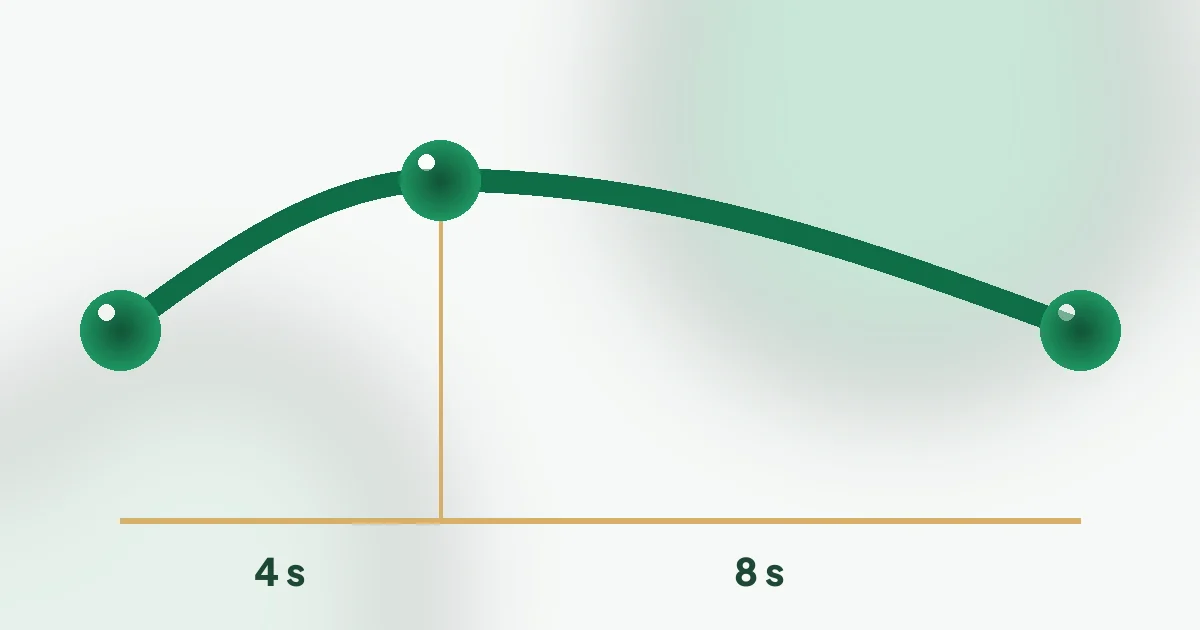
Extended exhale breathing, also known as 4-8 breathing, means breathing out for twice as long as you breathe in: inhale through the nose for 4 seconds, then exhale slowly for 8. This 1:2 breathing ratio is the most direct way to slow your heart and switch on the parasympathetic nervous system, because the exhale is the phase in which the vagus nerve applies the brakes on heart rate. Ten cycles, about two minutes, are enough to feel the shift.
- Base rhythm: 4-second inhale, 8-second exhale, which works out to 5 breaths per minute instead of the usual 12 to 18 at rest.
- Noticeable within 1 to 2 minutes: heart rate dips on every exhale (respiratory sinus arrhythmia).
- At the same breathing rate, an exhale longer than the inhale produces more heart rate variability and more reported relaxation than a 1:1 ratio (Van Diest et al., 2014).
- At Stanford (Balban et al., 2023), 5 minutes a day of the physiological sigh (double inhale, long exhale) for one month improved mood more than meditation did.
- In BreathLife the exercise is called "Let Go" and adapts to your level, from 4-8 up to 12-24.
What is extended exhale breathing?
Extended exhale breathing is the simplest slow-breathing technique there is. You keep a natural inhale and stretch only the exhale until it lasts twice as long. No breath holds, no four-count boxes, no nostril work. One dial to turn, which is exactly why you can use it anywhere, eyes open, in a meeting or on the train.
The idea is old. Pranayama has taught for centuries that a long exhale settles the mind, and modern stress-management methods recycle the principle under other names: long exhale breathing, 4-8 breathing, pursed-lip breathing in respiratory therapy. What physiology added is the reason it works: breathing in nudges the heart faster, breathing out slows it down. Lengthening the exhale simply means spending more of each breath on the brake.
Extended exhale vs. physiological sigh vs. 4-7-8
- Extended exhale (4-8): a normal nasal inhale, an exhale twice as long, no pause. This is the continuous version, repeated for 10 cycles.
- The physiological sigh: two inhales through the nose (one full, then a short top-up), followed by one long exhale through the mouth. Your body does this reflexively every few minutes to reinflate collapsed air sacs in the lungs. Done on purpose 1 to 3 times, it is the emergency dose of the long exhale; repeated for 5 minutes, it becomes the "cyclic sighing" protocol tested at Stanford.
- 4-7-8 breathing: inhale 4, hold 7, exhale 8. Same exhale ratio, but the full-lung hold suits bedtime far better than a social situation.
A fourth neighbor is coherent breathing (cardiac coherence): same slow pace, but a 1:1 ratio (5 seconds in, 5 out). The 1:1 versus 1:2 question has been tested head to head, see below.
How to practice 4-8 breathing, step by step
- Get settled. Sit with a tall but relaxed spine, or lie on your back. Drop your shoulders and unclench your jaw. One hand on your belly will tell you whether the breath is going low enough.
- Empty first. One full, unforced exhale through the mouth so you start from relaxed lungs.
- Inhale through the nose for 4 seconds. The belly rises first; the chest barely moves. The inhale stays quiet and effortless. You are not trying to fill up.
- Exhale for 8 seconds. Through the nose, or through gently pursed lips as if you wanted to make a candle flame flicker without blowing it out. Keep the flow thin and even from start to finish while the belly softens back in.
- No pause, just continue. As soon as the exhale ends, let the next inhale begin on its own. No holding, no forced emptiness.
- Do 10 cycles, roughly 2 minutes at 4-8, then let the breath go free.
Common mistakes
- Inhaling too hard. A big, noisy inhale re-triggers arousal. The inhale should be smaller than you think; the exhale does the work.
- Squeezing out every last drop. If you run out of air early, drop to 4-6 for a few cycles and come back to 4-8.
- Tightening the throat to slow the air. The braking happens at the lips or the nose, not in the larynx. A clenched throat creates the very tension you are trying to release.
The 60-second version: the physiological sigh
When you do not have two minutes, use a physiological sigh: inhale through the nose, then, without exhaling, sneak in a second short inhale to top up; then breathe out through the mouth as slowly as you can. Repeat 1 to 3 times. The double inhale reopens the alveoli; the long exhale that follows does the rest.
Rhythms for every level
A 4-8 rhythm is a good starting point for almost everyone. If your CO₂ tolerance is already high, you can slow down further while keeping the 1:2 ratio. Here are the five rhythms of the "Let Go" exercise in BreathLife, always over 10 cycles:
| Level | Inhale | Exhale | Cycles | Approx. duration |
|---|---|---|---|---|
| Strained | 4 s | 8 s | 10 | 2 min |
| Tired | 6 s | 12 s | 10 | 3 min |
| Optimal | 8 s | 16 s | 10 | 4 min |
| Efficient | 10 s | 20 s | 10 | 5 min |
| Exceptional | 12 s | 24 s | 10 | 6 min |
There are no holds in this exercise, so those columns do not apply. The 12-24 rhythm, under 2 breaths per minute, is reserved for very experienced practitioners and should never produce air hunger.
How to choose your level
The right rhythm is the one where the exhale stays comfortable through its final second. To pin it down objectively, BreathLife uses the breathing age test: after a normal exhale, you hold your breath and time it until the first clear urge to breathe, with a 60-second cap. That time reflects your CO₂ tolerance, the gas that builds up when you slow your breathing. As a guide: under 10 s is Strained, 10 to 15 s Tired, 15 to 20 s Optimal, 20 to 25 s Efficient, and over 25 s Exceptional. The exact cutoffs shift with age. A low score is not a verdict; it is precisely the number that long-exhale practice improves.
Benefits and what the science says
1. The exhale is when the vagus nerve brakes the heart
The vagus nerve is the main cable of the parasympathetic system, the rest-and-recover branch. Its action on the heart is gated by breathing: during the inhale, vagal influence is partly suspended and the heart speeds up; during the exhale, it resumes and the heart slows. That oscillation is called respiratory sinus arrhythmia. Gerritsen and Band (2018) proposed a "respiratory vagal stimulation" model in which contemplative practices work largely through this channel: slow breathing with an exhale emphasis, hence stronger vagal tone. Lengthening the exhale means spending two thirds of every cycle in the braking phase. This is what people mean by parasympathetic breathing.
2. Slowness recruits the baroreceptors
At 5 or 6 breaths per minute, breathing resonates with the baroreflex, the loop that adjusts blood pressure beat by beat, and heart rate variability (HRV) rises sharply. In their systematic review of slow breathing, Zaccaro et al. (2018) link that HRV increase to calmer EEG signatures (more alpha activity) and to lower self-reported anxiety, anger and confusion. It is the mechanism that powers coherent breathing; extended exhale breathing adds the ratio on top.
3. The ratio matters, not just the rate
Van Diest et al. (2014) isolated exactly that variable. At a fixed rate of 6 breaths per minute, participants who exhaled longer than they inhaled showed larger respiratory sinus arrhythmia and reported more relaxation and positive energy than those who did the opposite. With the same cycle length, tilting the time toward the exhale gives a stronger calming effect. Separately, Komori (2018) observed physiological and subjective signs of relaxation in participants practicing prolonged expiratory breathing compared with normal breathing.
The physiological sigh, tested at Stanford
The most cited study is Balban et al. (2023), published in Cell Reports Medicine and run in Andrew Huberman's lab with David Spiegel. About a hundred adults were assigned for one month to one of four groups, 5 minutes a day: cyclic sighing (repeated physiological sighs), box breathing, cyclic hyperventilation with retention, or mindfulness meditation. All three breathing groups improved their mood more than the meditation group, and cyclic sighing, the exhale-focused protocol, produced the largest gain in positive affect and the largest drop in resting respiratory rate. Studies therefore suggest that a short daily practice counts for more than an occasional long session. Slowing the exhale also lets CO₂ rise slightly, which trains your tolerance and explains why your breath-hold time on the test improves with practice. Long-term clinical benefits (sleep, blood pressure, chronic anxiety) remain promising leads rather than settled facts.
When to use it, when to avoid it
Good moments
- In the minute before pressure hits: walking into an exam or job interview, picking up the microphone before public speaking, before a hard phone call. One to three physiological sighs, then a few 4-8 cycles with your eyes open. Nobody will notice.
- After a stress spike, when your heart is still pounding after an argument or bad news.
- At your desk between tasks, to cut the slow build-up of tension through the day.
- In bed at night: a long exhale is the natural doorway to sleep, a hold-free version of 4-7-8 that is gentler when you are wound up.
- As a daily baseline, 5 minutes a day, to train CO₂ tolerance and vagal responsiveness over time.
When to skip it or adapt it
Extended exhale breathing is calming by nature. Avoid it right before an explosive effort or whenever you need to switch on rather than off (an energizing technique such as kapalabhati is the better pick). If you feel lightheaded, tingly or short of air, shorten the ratio to 4-6 and breathe through the nose only. Do not try it for the first time while driving.
BreathLife is not a medical device. If you have a respiratory or heart condition, are pregnant, or have epilepsy, ask your doctor before changing how you breathe. During a panic attack, a long exhale is usually well tolerated, but if it increases discomfort, return to natural breathing.
How it compares with similar techniques
| Technique | Rhythm | Dominant effect | Best moment |
|---|---|---|---|
| Extended exhale ("Let Go") | 4-8, 1:2 ratio, no holds | Fast vagal braking, return to calm | Before or after a stress spike, at night |
| Cardiac coherence ("Steady Heart") | 5-5, 1:1 ratio, 5 min | Background HRV regulation | Three times a day, preventively |
| 4-7-8 breathing ("Deep Sleep") | 4-7-8 with a full-lung hold | Sedation, falling asleep | In bed, lights off |
| Box breathing ("Instant Calm") | 4-4-4-4, two holds | Focus, composure | Before a task that demands precision |
A simple rule of thumb: 1:1 to regulate, 1:2 to come down, holds to focus or fall asleep.
How BreathLife guides this exercise
In the BreathLife app, extended exhale breathing is called "Let Go." After your breathing age test, the app automatically sets the rhythm for your level, from 4-8 to 12-24, and the guided voice (English or French) cues the start of every inhale and exhale so you never have to count. You pick a 3, 5 or 10-minute session, and every session feeds your daily streak, with a free pass for the days you miss. Its cousin "Deep Reset" uses the same doubled exhale but puts the emphasis on diaphragmatic breathing: choose it if you tend to breathe high in the chest.
Conclusion
Of all the breathing techniques that calm the nervous system, extended exhale breathing asks the least and pays back the fastest: no holds, no special posture, one setting, exhale twice as long as you inhale. The physiology is clear (vagus nerve, baroreceptors, CO₂), the studies point the same way, and two minutes are enough to feel it. To find your starting rhythm, take the free breathing age test: 60 seconds, and you will know whether to begin at 4-8 or slower.