
Introduction: the fourth pillar of yoga
In Patanjali's Yoga Sutras (2nd century BCE), yoga comprises eight limbs (ashtanga). Pranayama is the fourth — after ethical rules (yama), personal discipline (niyama), and postures (asana), and before meditation. This is no accident: in the yogic tradition, mastering breath is the prerequisite for mastering the mind.
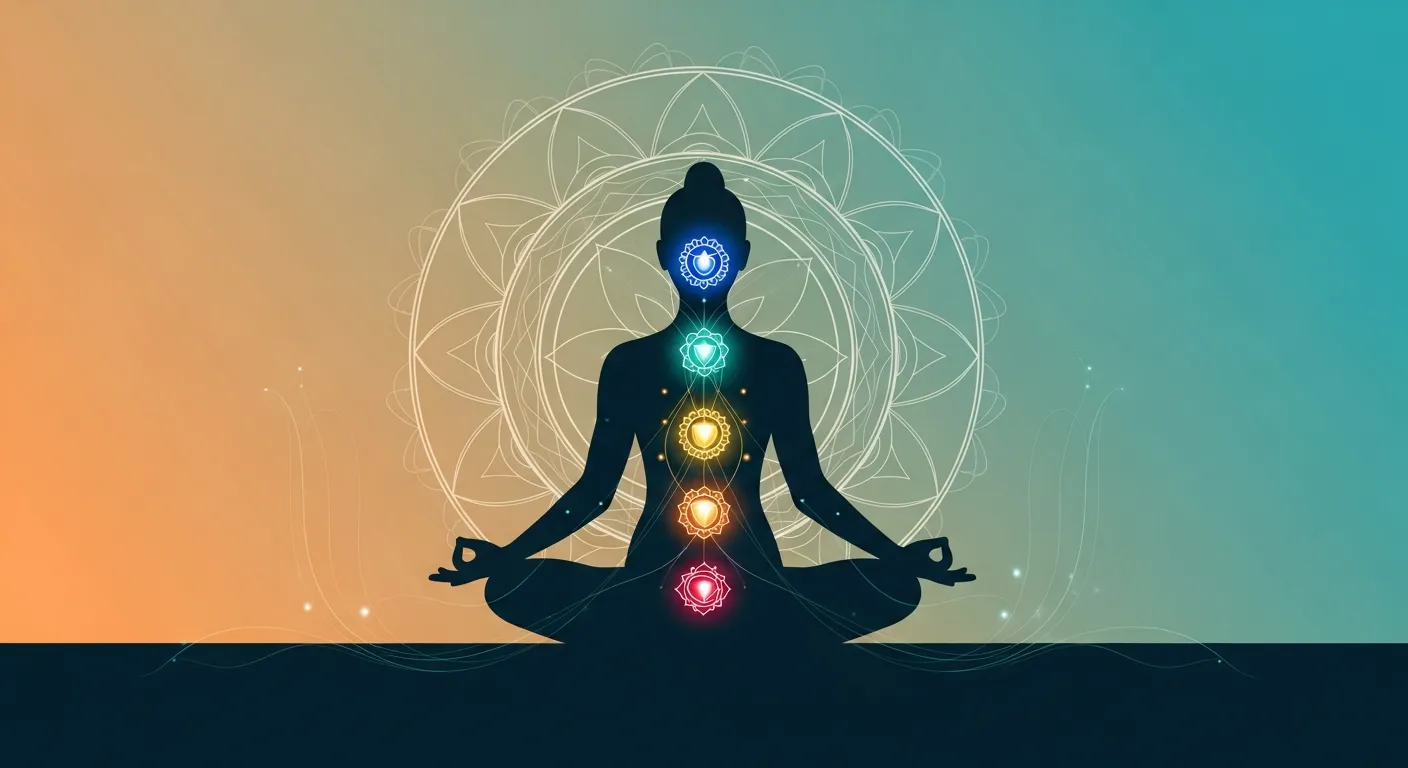
The word "pranayama" comes from Sanskrit: prana (vital energy, cosmic breath) + ayama (extension, control). It's not simply about "doing breathing exercises" — it's about controlling vital energy itself. For yogis, prana isn't just oxygen: it's the force that animates all life, circulating through the body via subtle channels called nadis (72,000 according to tradition).
Today, science confirms what yogis knew empirically: each pranayama technique produces measurable and distinct neurophysiological effects. Studies using EEG, functional MRI, and heart rate variability have transformed pranayama from an esoteric practice into a validated therapeutic tool.
The philosophy of prana
Before practicing, it's important to understand the yogic vision of breath:
- The 5 pranas (Pancha Prana): prana isn't uniform — it flows in 5 currents through the body. Prana vayu (chest — absorption), Apana vayu (pelvis — elimination), Samana vayu (abdomen — digestion), Udana vayu (throat — expression), Vyana vayu (entire body — circulation).
- The 3 main nadis: Ida (left nostril — lunar energy, calm, receptive), Pingala (right nostril — solar energy, active, stimulating), Sushumna (central channel — spiritual awakening). Pranayama aims to balance Ida and Pingala to open Sushumna.
- The bandhas: energy "locks" used during pranayama to direct prana. Mula bandha (perineum contraction), Uddiyana bandha (abdominal contraction), Jalandhara bandha (chin to sternum).
The 8 main techniques
1. Nadi Shodhana (Alternate Nostril Breathing)
Philosophy: balances Ida and Pingala, purifies nadis, prepares for meditation.
Science: synchronizes both brain hemispheres, increases alpha waves, reduces heart rate and blood pressure. A 2013 study (International Journal of Yoga) showed a 15% HRV improvement after 6 weeks of daily practice.
Protocol:
- Sit in a comfortable posture, back straight.
- Right hand in Vishnu Mudra (index and middle fingers folded toward palm).
- Close right nostril with thumb. Inhale through left nostril (4 counts).
- Close both nostrils. Retain (4 counts).
- Release right nostril. Exhale through right (8 counts).
- Inhale through right (4 counts). Retain (4 counts). Exhale through left (8 counts).
- That's one cycle. Practice 10-20 cycles.
Duration: 10-15 minutes. Best time: morning upon waking or before meditation.
2. Kapalabhati (Skull Shining)
Philosophy: nadi cleansing, digestive fire (Agni) activation, mental purification.
Science: increases alertness, activates sympathetic nervous system, increases intra-abdominal pressure (organ massage), increases beta waves (concentration).
Protocol:
- Sit with back straight, hands on knees.
- Exhale sharply through the nose by contracting the belly. Inhalation is passive — belly relaxes naturally.
- Rhythm: 1 exhale per second. Start with 30 exhales, increase to 120.
- 3 rounds with 30 seconds rest between each.
Precaution: contraindicated during pregnancy, for uncontrolled hypertension, abdominal hernias, cardiac problems.
3. Bhastrika (Bellows Breath)
Philosophy: Kundalini activation, intense nadi purification, increasing inner fire.
Science: temporarily increases body temperature, heart rate, and blood pressure. Increases noradrenaline production. Effect comparable to short intense physical exercise.
Protocol:
- Sit with fists closed in front of shoulders.
- Inhale powerfully through nose while raising arms above head (open hands).
- Exhale powerfully while bringing arms down and closing fists.
- Fast rhythm: 1 cycle/second. 20 repetitions, then full-lung retention (10-15s).
- 3 rounds.
Precaution: the most intense pranayama. Same contraindications as Kapalabhati, plus epilepsy and severe anxiety disorders.
4. Ujjayi (Victorious Breath)
Philosophy: mental concentration, internal heating, foundational pranayama for asana practice.
Science: slight glottal constriction increases intrathoracic pressure, activates vagus nerve via baroreceptors, and produces a soothing sound (effect similar to "om" vibrations). Reduces respiratory rate and increases HRV.
Protocol:
- Inhale through nose while slightly constricting the back of the throat — an "ocean wave" sound should be audible.
- Exhale through nose with the same constriction.
- Slow rhythm: 5-6 breaths per minute.
- Can be practiced during yoga postures or in seated meditation.
5. Brahmari (Bee Breath)
Philosophy: pratyahara (sense withdrawal), preparation for deep meditation.
Science: humming produces nitric oxide in sinuses (15 times more than normal breathing), stimulates vagus nerve via laryngeal vibrations, increases theta waves (deep meditation). Effective for insomnia and tinnitus.
Protocol:
- Block ears with thumbs, place fingers over face (Shanmukhi Mudra).
- Inhale through nose. Exhale while producing a deep, continuous humming ("mmmmm").
- Feel vibrations in skull, face, and chest.
- 10-15 cycles. Stay still for 2 minutes afterward.
6. Sitali / Sitkari (Cooling Breath)
Philosophy: cooling body and mind, soothing Pitta (fire).
Science: effectively reduces body temperature by 0.5-1°C, lowers blood pressure, reduces thirst and hunger.
Sitali protocol: roll tongue into a tube (genetic — 65% of people can do it). Inhale through rolled tongue. Exhale through nose. 15-20 cycles.
Sitkari protocol (alternative): clench teeth, spread lips, inhale through gaps between teeth with a "sss" sound. Exhale through nose.
7. Surya Bhedana (Solar Breathing)
Philosophy: Pingala nadi activation, energy, warmth, stimulation.
Science: exclusive right-nostril inhalation activates left hemisphere (logic, verbal) and increases sympathetic activity.
Protocol: block left nostril, inhale through right. Block both nostrils, retain. Exhale through left. Always inhale through right. 10-15 cycles.
8. Chandra Bhedana (Lunar Breathing)
Philosophy: Ida nadi activation, calm, coolness, receptivity.
Science: exclusive left-nostril inhalation activates right hemisphere (creativity, spatial) and increases parasympathetic activity.
Protocol: the reverse of Surya Bhedana — always inhale through left, exhale through right. 10-15 cycles. Ideal before bedtime.
Progressive pranayama program
Never practice all pranayamas in a single session. Here's an 8-week progression:
- Weeks 1-2: Ujjayi only (10 min/day). Master throat constriction and slow rhythm.
- Weeks 3-4: Ujjayi (5 min) + Nadi Shodhana without retention (10 min).
- Weeks 5-6: Nadi Shodhana with retention (15 min) + Brahmari (5 min).
- Weeks 7-8: Kapalabhati (3 min) + Nadi Shodhana (10 min) + Brahmari (5 min). Add Sitali if practicing during warm months.
Fundamental rules:
- Practice on an empty stomach or 2 hours after a meal.
- Practice at the same time each day (Brahma Muhurta — 4-6 AM — is the traditional time).
- Never force. If you feel dizzy, headachy, or anxious, stop and breathe normally.
- Consistency trumps intensity: 10 minutes every day is better than an hour once a week.
Conclusion
Pranayama is a 5,000-year-old treasure that modern science is only beginning to map. Each technique produces distinct, measurable neurophysiological effects — from the sympathetic activation of Kapalabhati to the deep calm of Brahmari. It's a complete, coherent, progressive system that transforms not only breathing but the relationship with oneself. BreathLife integrates the main pranayama techniques with audio guidance adapted to every level.
These ancient techniques are particularly accessible for teaching children to breathe, and provide an ideal foundation for exploring breathing and creativity.