
Key takeaways
Breathing for stress relief works because the link runs both ways: stress speeds up your breathing, and fast, shallow breathing keeps the stress response going, even with no real danger. Slowing your breath, especially the exhale, engages the vagus nerve, your nervous system's brake. A few minutes is often enough.
- Stress breathing: fast, high in the chest, through the mouth, with unnoticed breath-holding.
- 5 researched techniques: belly breathing, the physiological sigh, box breathing, extended exhale, alternate nostril breathing.
- Cyclic sighing: 5 minutes a day for a month improved mood more than mindfulness meditation (Balban et al., 2023).
- Anxiety spike: inhale for 3 seconds, exhale for 6, for 2 to 5 minutes.
Introduction: the stress-breathing vicious cycle
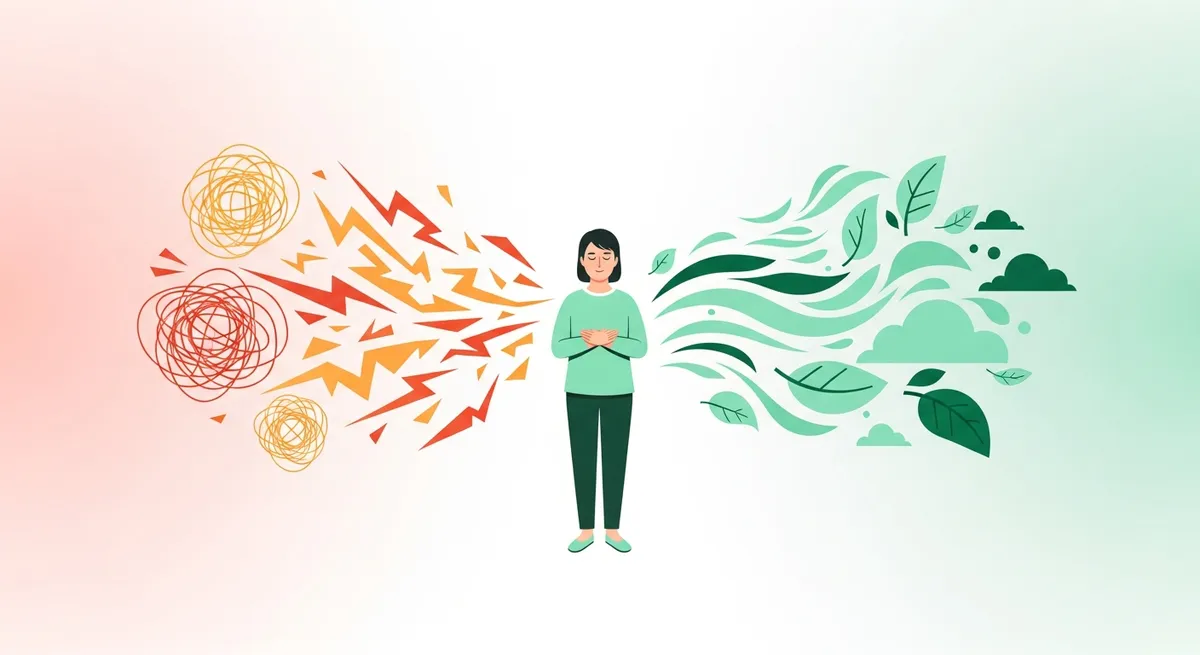
When you're stressed, your breathing changes. It becomes faster, shallower, more chest-centered. What most people don't realize is that the reverse is also true: rapid, shallow breathing sends a stress signal to your brain, even in the absence of real danger. It's a vicious cycle that millions of people unknowingly maintain, day after day.
The good news: this cycle can be broken. And breathing is the most direct and fastest tool to do it. No need to meditate for an hour, take supplements, or change your lifestyle. A few minutes of controlled breathing are often enough to calm your nervous system.
In this article, we'll explore 5 breathing techniques whose effect on stress has been studied scientifically, with varying levels of evidence. For each one, you'll find the exact protocol, the science behind it, and the situations where it's most appropriate.
How stress changes your breathing
To understand why breathing is such a powerful anti-stress tool, you first need to understand what happens in your body when stress sets in.
The autonomic nervous system: two modes
Your autonomic nervous system (ANS) works like a thermostat with two modes:
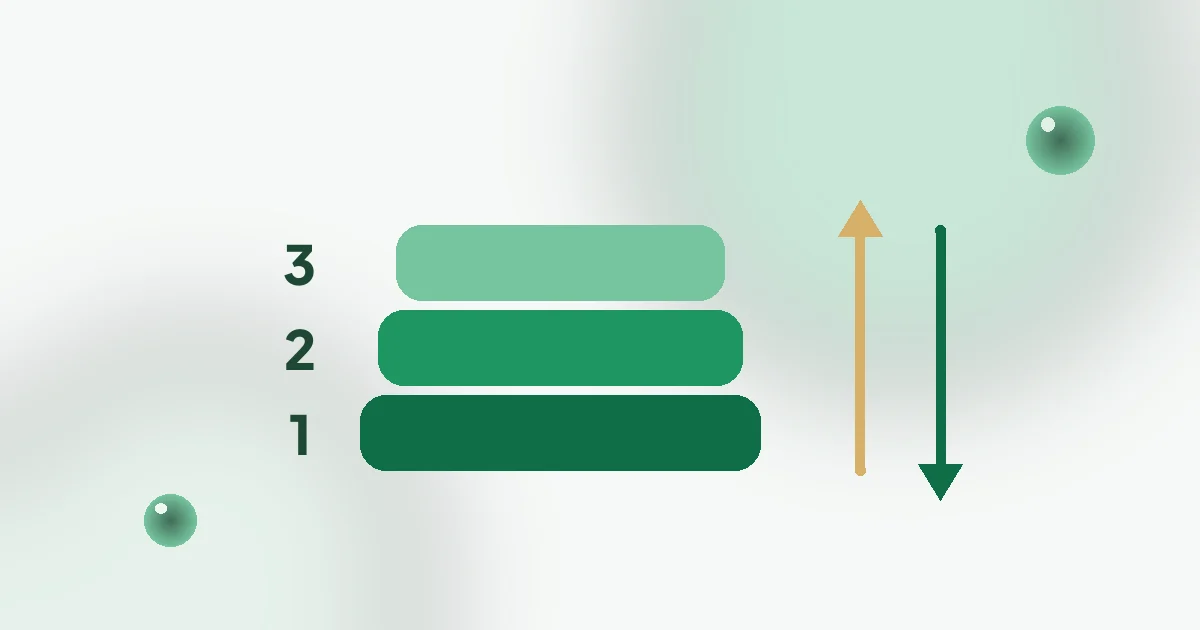
- Sympathetic mode (accelerator): prepares the body for action. Heart rate up, muscles tense, breathing rapid, digestion paused, cortisol and adrenaline circulating.
- Parasympathetic mode (brake): promotes rest, digestion, recovery, and regeneration. Low heart rate, relaxed muscles, slow deep breathing.
In a healthy person, these two modes alternate fluidly as needed. But chronic stress locks the thermostat in sympathetic mode. Your body remains on permanent alert, even at rest, even at night.
The respiratory signature of stress
Chronic stress leaves a recognizable imprint on your breathing:
- Higher rate: breathing speeds up, often beyond the usual resting range (12 to 20 per minute).
- Chest breathing: the diaphragm is locked, shoulders and upper chest compensate.
- Mouth breathing: the mouth opens unconsciously to increase airflow.
- Frequent sighing: the body attempts to restore CO₂ balance through involuntary deep breaths.
- Unconscious apneas: you hold your breath without realizing it, especially in front of a screen (a phenomenon called "email apnea" by researcher Linda Stone).
Technique 1: Diaphragmatic breathing
For whom: everyone. This is the foundation of all other techniques.
Duration: 3 to 5 minutes.
Protocol
- Sit or lie down. Place one hand on your chest, the other on your belly.
- Inhale slowly through your nose for 4 seconds. Only the hand on your belly should move — the chest stays still.
- Exhale slowly through your mouth for 6 seconds, letting your belly deflate.
- Repeat for 3 to 5 minutes.
The science
A systematic review (Hopper et al., 2019) found three studies on diaphragmatic breathing: all reported lower stress, measured in each case by salivary cortisol, blood pressure or a questionnaire. The studies remain few and small. In one of them, 8 weeks of training lowered salivary cortisol compared with a control group (Ma et al., 2017).
The proposed mechanism: slow, full breathing engages stretch receptors in the lungs and favors vagus nerve activity, the brake of the nervous system.
Technique 2: Physiological sigh (cyclic sighing)
For whom: those who want the fastest possible anti-stress effect.
Duration: 5 minutes a day in the reference study; one or two sighs already help release tension in the moment.
Protocol
- Inhale through your nose in two parts: a first long inhalation that fills the lungs to about 80%, then a short additional inhalation that fills them completely.
- Exhale slowly through your mouth, as long as possible (8 to 12 seconds).
- Repeat for 5 minutes.
The science
This technique was propelled by a Stanford study published in Cell Reports Medicine in January 2023. Researchers (including neuroscientist Andrew Huberman) compared, over one month, 5 daily minutes of three breathing exercises and mindfulness meditation. Result: breathwork, and especially cyclic sighing, improved mood and lowered resting breathing rate more than meditation; anxiety fell in all groups.
Why the double inhalation? It reopens collapsed lung alveoli (atelectasis), maximizing the gas exchange surface and allowing more complete CO₂ expulsion during the long exhale that follows.
Technique 3: Box breathing
For whom: those who need to stay calm AND alert (professionals, athletes, military).
Duration: 4 to 10 minutes.
Protocol
- Inhale through your nose for 4 seconds.
- Hold your breath for 4 seconds.
- Exhale through your mouth for 4 seconds.
- Hold lungs empty for 4 seconds.
- Repeat.
The science
Box breathing is used by Navy SEALs, firefighters, and special forces to maintain calm under pressure. In the Stanford study mentioned above, one month of box breathing (5 minutes a day) also improved mood, slightly less than cyclic sighing (Balban et al., 2023).
The unique aspect of this technique is the balance between all 4 phases. Unlike long-exhale techniques (which favor the parasympathetic), box breathing maintains sympathetic-parasympathetic balance. Result: you're calm but not drowsy. That's why it's preferred in contexts where vigilance is essential.
Technique 4: Extended exhale (2:1)
For whom: those experiencing a stress or anxiety spike who need to calm down quickly.
Duration: 2 to 5 minutes.
Protocol
- Inhale through your nose for 3 seconds.
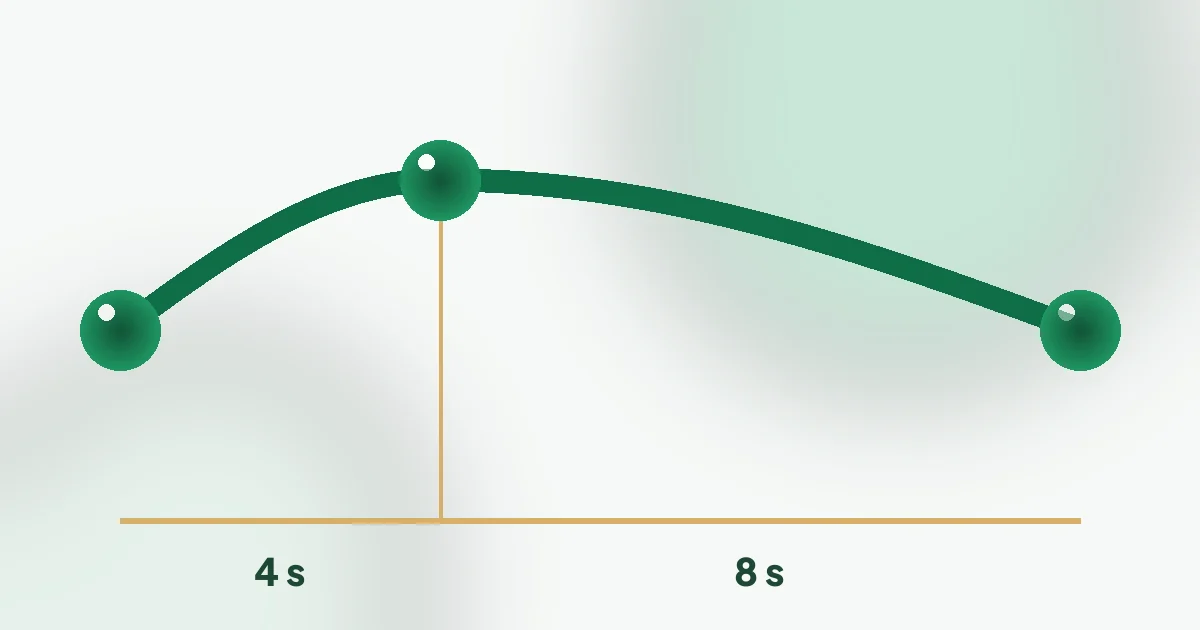
- Exhale through your mouth for 6 seconds (double).
- Repeat for 2 to 5 minutes.
The 2:1 ratio (exhale = 2× inhale) can be adapted to your pace: 4:8, 3:6, or even 2:4 for beginners.
The science
Exhalation is when the vagus nerve is most active. By lengthening the exhale relative to the inhale, you maximize time spent in parasympathetic activation each cycle. A Belgian study showed that, at the same slow pace, an exhale longer than the inhale raises the vagal component of HRV (heart rate variability) and the feeling of relaxation more (Van Diest et al., 2014). A single session of slow breathing with a long exhale also reduced in-the-moment anxiety, in younger and older adults alike (Magnon et al., 2021).
Technique 5: Alternate nostril breathing (Nadi Shodhana)
For whom: those seeking deep calm and mental rebalancing.
Duration: 5 to 10 minutes.
Protocol
- Sit comfortably. Use your right thumb to close your right nostril.
- Inhale through the left nostril for 4 seconds.
- Close both nostrils and hold for 4 seconds.
- Release the right nostril, exhale through it for 4 seconds.
- Inhale through the right nostril for 4 seconds.
- Close both nostrils, hold for 4 seconds.
- Release the left nostril, exhale for 4 seconds.
- That's one complete cycle. Repeat 8 to 12 cycles.
The science
Alternate nostril breathing is one of the most studied pranayama techniques. In a randomized trial of 90 people with hypertension, 10 minutes of alternate nostril breathing lowered blood pressure right after the session (Telles et al., 2013); in young adults, it raises markers of vagal activity during practice (Telles et al., 2014). The idea that it "balances" the brain hemispheres rests on the nasal cycle (Werntz et al., 1983) and remains a hypothesis.
Which technique to choose?
Here's a quick guide based on your situation:
- Daily stress, prevention → Cardiac coherence or diaphragmatic breathing
- Anxiety spike, need immediate calm → Physiological sigh or extended exhale 2:1
- Need calm AND alertness → Box breathing
- Before sleep → 4-7-8 technique (see our dedicated article) or extended exhale
- Deep rebalancing, meditation → Alternate nostril breathing
Ideally, master 2 to 3 techniques and alternate them depending on context. The BreathLife app offers guided sessions for each of these methods, with protocols adapted to your level and goals.
How to turn these techniques into habits
Knowing a technique and practicing it regularly are two very different things. Here are 4 strategies to anchor the practice:
- Habit stacking: "After my morning coffee, I do 5 minutes of cardiac coherence." Attaching a new habit to an existing ritual helps you maintain it.
- Contextual reminders: put a sticky note on your screen that says "Breathe" or set up 3 daily phone reminders.
- Progress tracking: note each session (even just a ✓ in your planner). The simple act of tracking reinforces commitment.
- Using an app: guided breathing apps like BreathLife eliminate the mental load of "how to do it" and make practice more engaging through progress tracking and personalized goals.
Conclusion
Stress is not inevitable, and medication isn't the only answer. Your breathing is a powerful, free, always-available anti-stress tool. The 5 techniques presented in this article are backed by research, simple to learn, and immediately applicable. The only question remaining: which one will you start with?
To go further, discover how to apply these techniques during public speaking, before an exam or interview, or decode the science of yawning — a fatigue signal that breathing can counteract.