
Introduction: a detail that changes everything
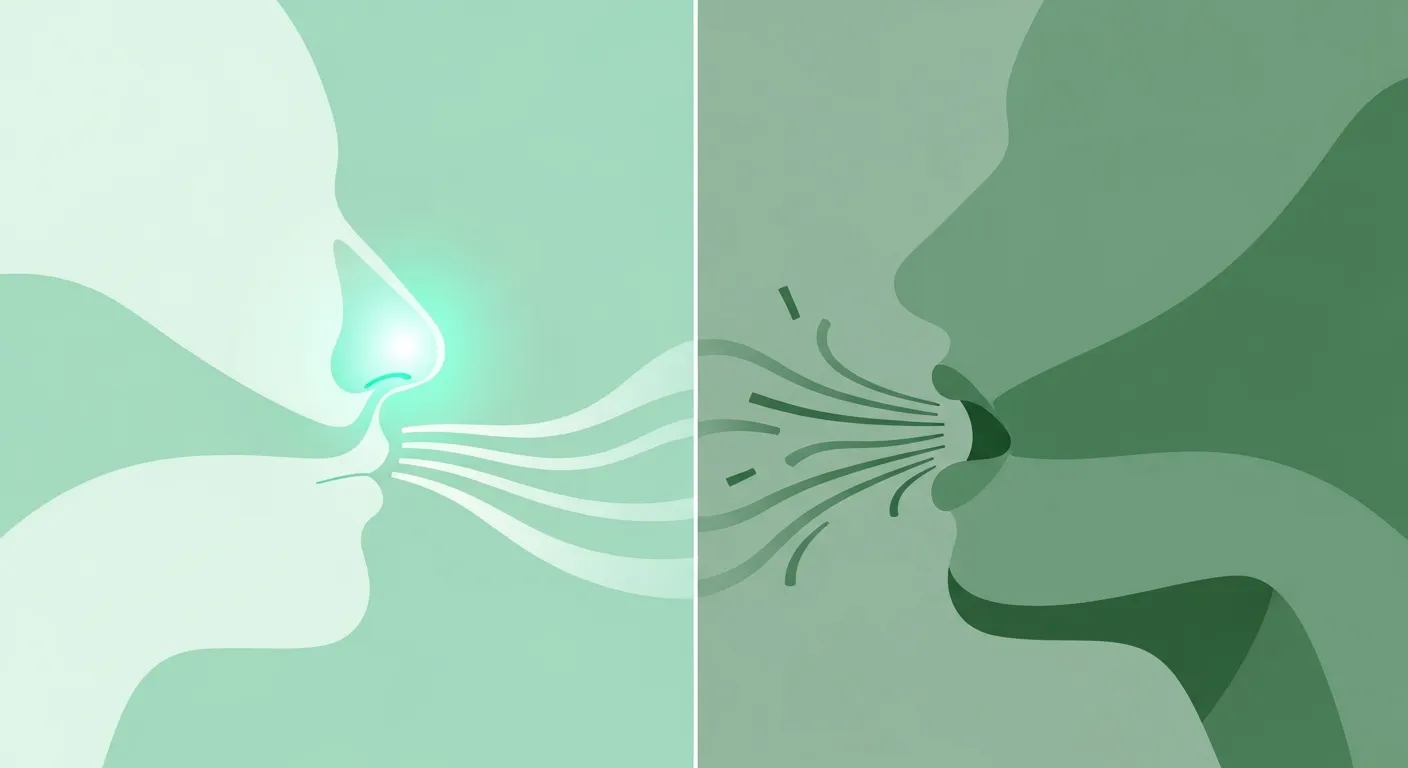
Breathing through your nose or through your mouth — at first glance, it seems unimportant. Air goes in, air goes out, and the result is the same, right? In reality, the difference between these two breathing modes is considerable. It influences your sleep, energy levels, oral health, physical fitness, and even the structure of your face over time.
Researchers like Dr. Patrick McKeown (The Oxygen Advantage) and science journalist James Nestor (Breath) have documented the profound effects of nasal breathing on health. Their work converges on a simple conclusion: the nose is the organ designed for breathing; the mouth is designed for eating and talking.
Your nose's anatomy: a precision machine
The nose isn't just a hole through which air passes. It's a sophisticated organ with several essential functions:
- Filtration: nasal hairs and turbinates trap fine particles, allergens, bacteria, and viruses before they reach your lungs. Breathing through the mouth removes this natural filter.
- Humidification: air breathed through the nose is humidified to about 95% relative humidity before reaching the pulmonary alveoli. Dry mouth air irritates the airways.
- Warming: the nose warms inhaled air to body temperature (37°C/98.6°F). Cold air entering directly through the mouth causes bronchospasm in some people, especially asthmatics.
- Nitric oxide (NO) production: this is perhaps the most important and least known function. The paranasal sinuses produce nitric oxide, a gas with vasodilatory, bronchodilatory, and antimicrobial properties.
Nitric oxide: your nose's superpower
Nitric oxide (NO) is a gas naturally produced by the paranasal sinuses during nasal breathing. Discovered in the 1990s (Nobel Prize in Medicine in 1998), it plays a crucial role in the body:
- Vasodilation: NO dilates blood vessels, improving circulation and reducing blood pressure. It's the same mechanism used by hypertension medications.
- Bronchodilation: it opens airways, facilitating air passage to the alveoli. Studies show a 10-15% improvement in oxygen absorption with nasal breathing.
- Antimicrobial effect: NO destroys bacteria, viruses, and fungi in the nasal passages, serving as a first line of immune defense.
- Inflammation regulation: it modulates the inflammatory response, reducing allergies and asthma in many patients who switch to exclusive nasal breathing.
When you breathe through your mouth, you completely bypass this nitric oxide factory. It's like having a state-of-the-art air purification system at home but leaving the window wide open during a pollution spike.
The consequences of mouth breathing
Chronically breathing through the mouth isn't just "less optimal" — it's actively harmful to your health. Here are the documented effects:
On sleep
Mouth breathing during the night is one of the main causes of snoring and obstructive sleep apnea. When the mouth is open, the tongue falls backward and partially obstructs the airways. The result: repeated micro-awakenings, decreased oxygen saturation, and fragmented sleep that doesn't allow proper recovery.
On oral health
Saliva naturally protects teeth and gums against bacteria. Mouth breathing dries the mouth, reducing saliva flow. Consequences: more frequent cavities, bad breath, gingivitis, and periodontal disease. Dentists often observe dental problems in chronic mouth breathers.
On posture and appearance
In children, chronic mouth breathing changes facial development: narrow palate, receding chin, forward head posture. In adults, it maintains a forward head tilt, creating tension in the neck and shoulders. Dr. John Mew documented these facial changes in twins where one breathed through the nose and the other through the mouth — the difference is striking.
On stress and anxiety
Mouth breathing is naturally faster and shallower than nasal breathing. It activates the sympathetic nervous system ("fight or flight" mode), maintaining elevated cortisol levels and promoting chronic anxiety. Many anxious people don't realize their mouth breathing is both a symptom and a cause of their condition.
Nasal breathing and athletic performance
Most athletes automatically breathe through their mouths during exercise. It's instinctive — but is it optimal? Recent research suggests it isn't.
A University of Colorado study showed that athletes trained in nasal breathing during exercise maintained the same performance (similar VO₂ max) while reducing their breathing rate by 39%. Their bodies became more efficient at using available oxygen.
Dr. McKeown recommends the "closure rule": if you need to open your mouth during exercise, the intensity is too high for your current CO₂ tolerance level. By maintaining nasal breathing, you train your body to better tolerate CO₂, which progressively improves your endurance.
Elite athletes including trail runners and yoga practitioners use exclusively nasal breathing, even during intense effort. Their secret: progressive training starting with low-intensity activities.
Switching to nasal breathing at night
This is perhaps the most impactful change you can make for your health. Here's how to proceed:
- Check your nasal permeability: if your nose is constantly blocked, see an ENT specialist. A deviated septum or polyps can be treated.
- Clear your nostrils: before bed, do a nasal wash with saline solution or use a decongestant nasal spray (no more than 3 consecutive days for medicated sprays).
- Mouth taping: this technique involves placing a small piece of surgical tape on your lips before bed to keep your mouth closed. James Nestor recommends and practices it daily. Start with a small piece at the center of your lips — you can always open your mouth if needed.
- Sleep position: sleeping on your side promotes nasal breathing. Sleeping on your back encourages the tongue to fall back and the mouth to open.
How to switch to nasal breathing daily
The transition doesn't happen overnight. Here's a progressive program:
- Week 1 — Observation: set hourly reminders to check if your mouth is closed. Note how many times you breathe through your mouth. Awareness is the first step.
- Week 2 — Active correction: each time you catch yourself with your mouth open, gently close it and resume nasal breathing. Adopt the "tongue on palate" position: the tongue rests against the palate, behind the upper incisors.
- Weeks 3-4 — Physical exercise: start maintaining nasal breathing during walking, then light jogging. Reduce intensity if you need to open your mouth.
- Month 2+ — Night: once daytime nasal breathing is established, move to nighttime mouth taping. Start with a nap to test.
3 exercises to decongest your nose
A blocked nose isn't inevitable. These exercises leverage the Bohr effect to naturally decongest your nostrils:
- Breath-hold walking: exhale normally, pinch your nose, then walk 10-20 steps while holding your breath. Release and breathe gently through your nose. Repeat 5 times. CO₂ accumulation triggers nitric oxide release, which dilates the nasal passages.
- Alternate nostril breathing (Nadi Shodhana): close the right nostril, inhale through the left (4 seconds). Close both nostrils (4 seconds). Open the right, exhale (4 seconds). Inhale through the right (4 seconds). Close, then exhale through the left. Repeat 10 cycles.
- Humming: inhale through the nose, then hum for a long exhale. The vibrations from humming increase nitric oxide production by 1,500% according to a study published in the American Journal of Respiratory and Critical Care Medicine.
Conclusion
Your nose isn't a decorative accessory — it's the most underrated organ in your body. Switching from mouth breathing to nasal breathing is probably the simplest and most impactful health change you can make today. No equipment needed, no subscription required, no heroic motivation necessary. Simply close your mouth and let your nose do the job it was designed for.
Nasal breathing also plays a key role in balancing CO₂ in your body and maintaining a healthy respiratory microbiome.