
Introduction: the nerve you don't know (but that controls everything)
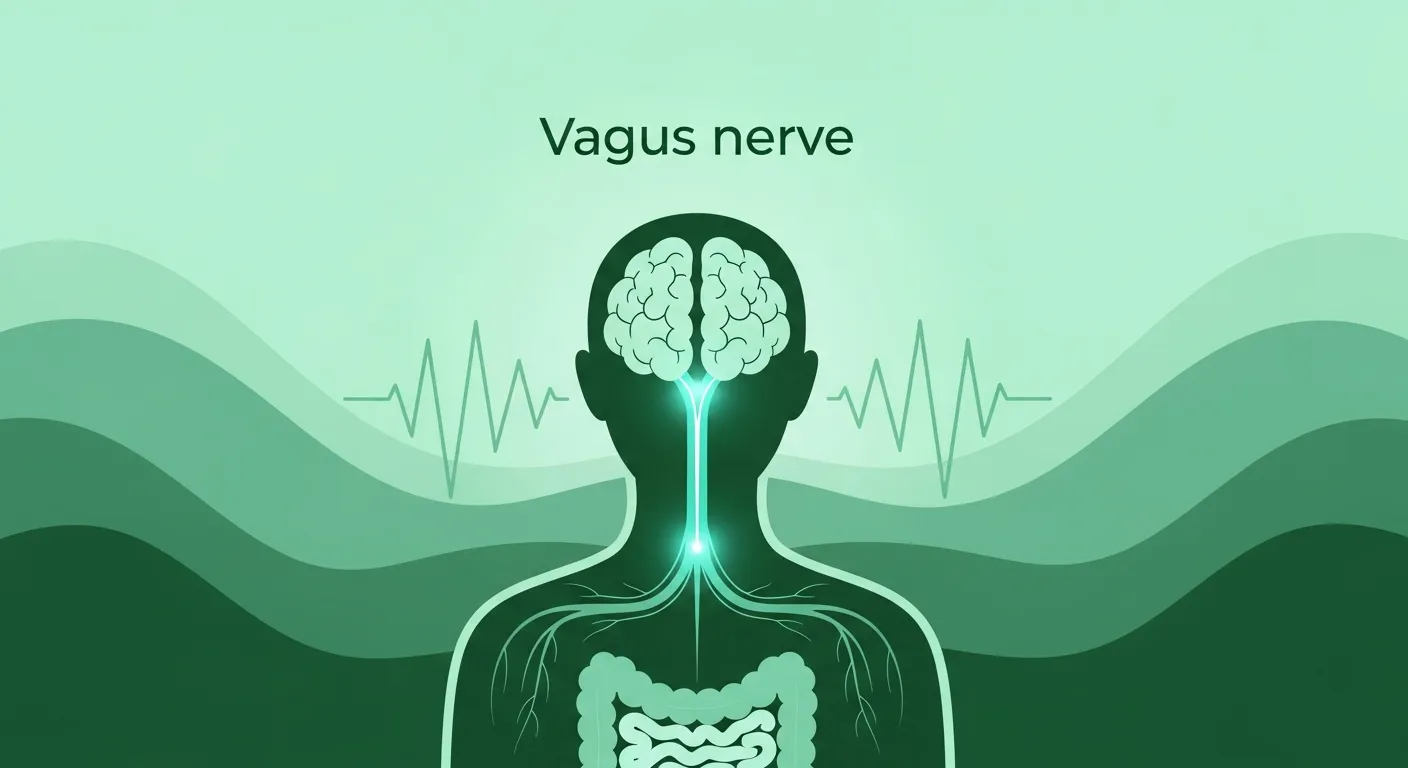
It starts at your brainstem, crosses through your neck, runs alongside your heart, passes through your lungs, stomach, intestines, and influences virtually every organ in your body. The vagus nerve (or pneumogastric nerve) is the longest and most branched of all cranial nerves. And it's also the most important one you've been ignoring.
This nerve is the main channel of the parasympathetic nervous system — the "rest, digest, and recover" branch of your autonomic nervous system. When it functions well, you're calm, digest properly, sleep deeply, and handle stress with ease. When it's underactive, you get anxiety, digestive issues, chronic inflammation, and insomnia.
The best news: you can voluntarily stimulate your vagus nerve through breathing. No medication, devices, or surgery needed — just a few minutes of conscious breathing per day.
Vagus nerve anatomy: an information highway
The vagus nerve (from Latin vagus, "wandering") lives up to its name: it "wanders" through almost the entire body. It's the tenth cranial nerve (X), with two main branches:
- The afferent branch (80% of fibers): carries information FROM the organs TO the brain. Your brain constantly "listens" to the state of your heart, lungs, stomach, and intestines via the vagus nerve.
- The efferent branch (20% of fibers): carries orders FROM the brain TO the organs. Through this pathway, the brain slows the heart, stimulates digestion, and reduces inflammation.
The vagus nerve directly innervates:
- The heart: it slows heart rate.
- The lungs: it regulates bronchodilation.
- The digestive system: it stimulates gastric secretion, peristalsis, and enzyme production (see breathing and digestion).
- The liver and pancreas: it regulates blood sugar.
- The spleen: it modulates immune response and inflammation.
- The larynx: it controls vocal cords and swallowing.
Vagal tone: your "anti-stress score"
Vagal tone measures your vagus nerve activity. The higher it is, the better your body handles stress, inflammation, and recovery. It's measured indirectly through heart rate variability (HRV).
HRV measures micro-variations between each heartbeat. Contrary to what you might think, a healthy heart doesn't beat with perfect regularity — it speeds up slightly during inhalation and slows during exhalation. This variation is called respiratory sinus arrhythmia, and it directly reflects vagal activity.
High vagal tone is associated with:
- Better stress and emotional management.
- Lower systemic inflammation.
- Reduced cardiovascular risk (see breathing and hypertension).
- Better digestion.
- Deeper, more restorative sleep.
- Faster athletic recovery.
- A more responsive immune system.
Low vagal tone is associated with:
- Anxiety and depression.
- Chronic inflammatory diseases (Crohn's, rheumatoid arthritis).
- Irritable bowel syndrome (IBS).
- Cardiovascular disease.
- Type 2 diabetes.
How breathing stimulates the vagus nerve
Breathing is the most direct and powerful way to stimulate the vagus nerve. Here are the mechanisms involved:
Respiratory sinus arrhythmia
With each inhale, the vagus nerve reduces its activity, allowing the heart to slightly accelerate. With each exhale, the vagus nerve increases its activity, slowing the heart. By voluntarily extending the exhale, you amplify vagal stimulation for a greater portion of the breathing cycle.
Baroreceptors
Baroreceptors, located in the aortic arch and carotids, detect blood pressure changes. When pressure rises (during inhalation), they send a signal to the brain via the vagus nerve to slow the heart. Slow, deep breathing produces larger pressure oscillations, stimulating baroreceptors more — and therefore the vagus nerve.
Mechanical diaphragm stimulation
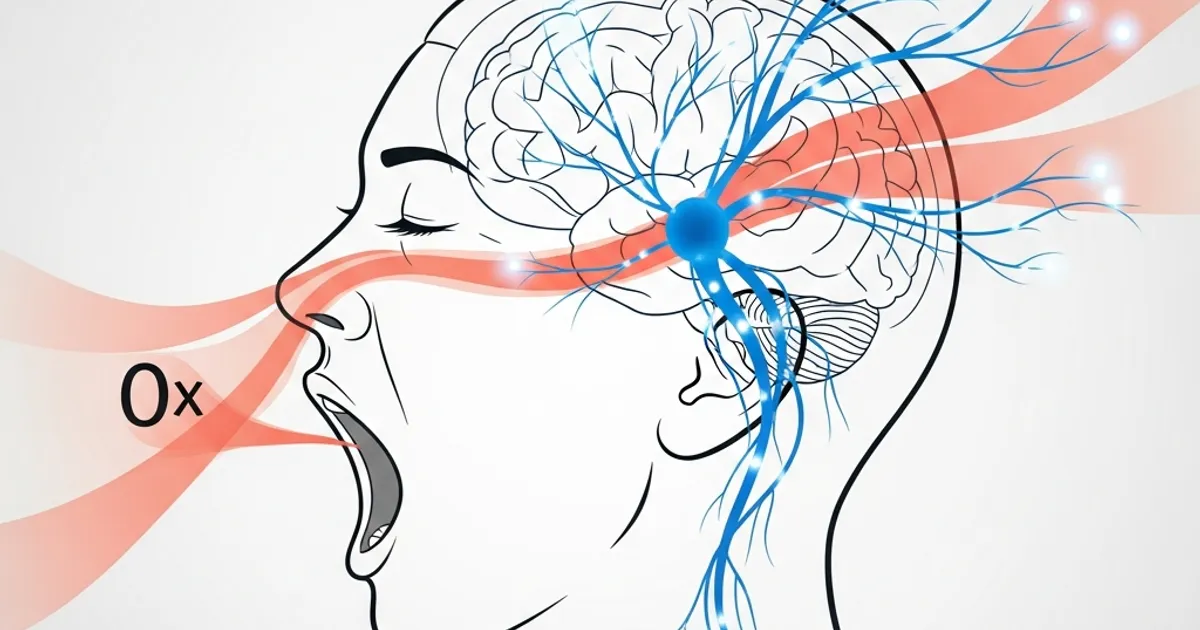
The vagus nerve passes through the diaphragm via the esophageal hiatus. During diaphragmatic breathing, the diaphragm's movement exerts direct mechanical stimulation on the vagus nerve. This is one reason why abdominal breathing is more calming than chest breathing.
5 exercises to stimulate your vagus nerve
1. Extended exhale breathing (4-8)
This is the simplest and most directly effective exercise for vagus nerve stimulation.
- Inhale through your nose for 4 seconds.
- Exhale slowly through your nose for 8 seconds.
- Practice for 5 minutes (about 25 cycles).
The 1:2 ratio (inhale:exhale) maximizes time spent in expiratory vagal stimulation. Measurable HRV effects from the very first session.
2. The 365 cardiac coherence protocol
The "365" protocol is the most scientifically studied method: 3 times per day, 6 breaths per minute, for 5 minutes.
- Inhale for 5 seconds.
- Exhale for 5 seconds.
- 6 cycles per minute for 5 minutes.
- Practice 3 times daily (morning, noon, evening).
At 6 breaths per minute, the cardiovascular system enters "resonance": HRV reaches maximum amplitude, and vagus nerve stimulation is optimal. Studies show measurable effects after 2 weeks of regular practice.
3. Vagal humming
Humming vibrations directly stimulate the vagus nerve at the larynx, where it innervates the vocal cords.
- Inhale through your nose for 4 seconds.
- While exhaling, hum a deep sound (like yoga's "om") for 8-10 seconds.
- Feel the vibrations in your throat, chest, and skull.
- Practice for 5 minutes.
Bonus: humming increases nitric oxide production in the paranasal sinuses by 1,500%, improving oxygenation and nasal immune function.
4. The face dive (dive reflex)
The mammalian dive reflex is a powerful vagal activator. When the face is immersed in cold water, the vagus nerve triggers an immediate heart rate reduction.
- Fill a bowl with cold water (50-59°F / 10-15°C).
- Take a deep breath.
- Submerge your face in the water for 15-30 seconds.
- Come up and breathe normally.
- Repeat 3-5 times.
Alternative: apply a cold washcloth to your face (forehead, cheeks, chin) for 30 seconds while breathing slowly.
5. Singing or recitation
Singing, chanting, or reciting aloud activates the vagus nerve through vocal cord vibration and the prolonged exhale required.
- Choose a mantra, song, or text.
- Recite it aloud, extending vowel sounds.
- Practice for 5-10 minutes.
This is likely why religious chanting (Gregorian, Buddhist mantras, Quranic recitation) produces a state of deep calm across all spiritual traditions.
Measuring your vagal tone
The most accessible way to measure your vagal tone is by tracking your HRV. Several options:
- Smart watches: Apple Watch, Garmin, and Whoop measure HRV during sleep. A gradually increasing score indicates improved vagal tone.
- Apps: apps like BreathLife integrate HRV tracking and guided vagal stimulation exercises.
- Simple morning test: take your pulse upon waking (before getting up) for 60 seconds. A resting pulse that decreases over weeks is an indirect indicator of improved vagal tone.
Integrating vagal stimulation into daily life
You don't need 30 minutes per day. Here's a realistic program:
- Morning (2 min): 6 breaths of 4-8 breathing upon waking, before checking your phone.
- Noon (5 min): a 365 cardiac coherence session after lunch.
- Afternoon (1 min): 30 seconds of humming during stress peaks.
- Evening (5 min): 4-8 breathing or cardiac coherence before bed.
Conclusion
The vagus nerve is your most powerful ally against stress, inflammation, and health imbalances. And breathing is the simplest way to stimulate it. By integrating a few minutes of conscious breathing into your day, you activate a natural anti-stress system that millions of years of evolution have perfected. No pills, no surgery, no expensive devices — just your breath.
Vagal stimulation is especially helpful for managing chronic pain and supporting an addiction recovery journey.